Author Archives: Cine Boot Camp Team

Love Boat Lessons – Know Before You Go!


It’s hard to remember back over twenty five years when the last original episode of The Love Boat aired. Of course, that show has been in heavy syndication since then and the mythology has it that an episode is constantly playing somewhere in the world. But back in 1985 it was considered to have ‘jumped the shark’ and network execs felt justified in pulling the plug. Little did they know, however, that the lame little show would have a huge impact far beyond the entertainment world. It can reasonably be stated that The Love Boat launched a multi-billion dollar Cruise Industry that services over 13 million people a year and continues to grow. But The Love Boat had help. Enter, The Association!
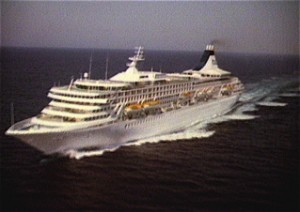
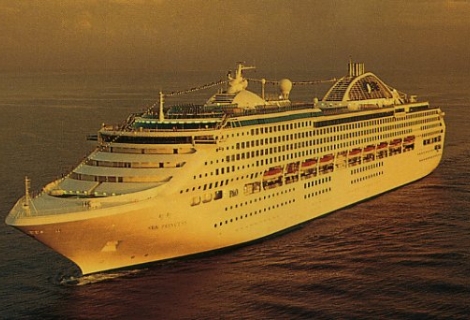
Royal Princess, 1985

In 1985 Princess Cruises asked us to make a promotional film to convince people to forsake a land-base vacation for the pleasures of a Princess Cruise. At the time, the industry served less than a million people and Princess had four ships, including the Island and Pacific Princesses, the original “Love Boats”. It was truly an unbelievable assignment and, realizing how fortunate we were, we set out to make the World’s Greatest Cruise Line Promotional Film. The success of our film was evidenced by the fact that Princess used it as their main sales and promotional piece for nearly ten years! It was also the first of over 150 films and videos we produced for Princess over the next twenty-four years. There are now 12 ships in the fleet with a capacity twenty times greater than when we signed on. Coincidence? We think not.

Although, we really can’t take total credit for the success of Princess Cruises and the greater Cruise Industry, there is no question that our original film was extremely successful both from an artistic and a business point of view. Why? Well, it wasn’t because we were such creative or experienced filmmakers. We weren’t. The real reason this film did so well was because we did the primary and secondary research on the potential audience really, really well. We asked dozens of travel agents about their clients’ views on cruising. Why they would or wouldn’t, what they expected, what they feared. We took a cruise and asked everyone on board why they were there, why they chose Princess, what they liked and didn’t like, etc. etc. We finally developed a crystal clear view of exactly what potential cruise passengers thought and what they would respond to. Then we went out and made a film that played to just those points. We knew it would be successful before we even started editing, simply because it addressed the audiences expectations.

Over the years we have employed this simple technique numerous times. In fact, we never make commercial productions without at least some survey of the prospective audience and their viewpoints. These days we utilize Optimized Market Research with one of our professional survey partners to do an in depth study so we can really get a handle on the viewing audience. It is probably the single most important activity of all of the many actions that result in a completed film. We are amazed when others in our industry don’t do this. It can almost guarantee success. This is just as true now as it was twenty-four years ago.

So if you want a successful commercial, promo or marketing video, regardless of the medium in which it’s shot or ultimately shown or displayed, never forget the market research data collection. Research your audience. Don’t shoot a frame before you really feel comfortable that you know exactly what that audience will respond to.As we say, “Know before you go.”
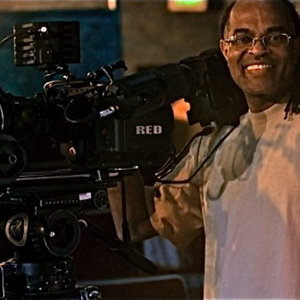

Canon Boot Camp Graduate Profile: Michael Brewer, Director and Cinematographer

Michael Brewer, director and cinematographer

Michael Brewer has worked for ABC-TV, Good Morning America, ESPN, VH-1 and other broadcast outlets. His work has taken him to international locations including South Africa, Hong Kong, Cuba, and most recently Namibia.

“I had never worked with DSLR and wanted to get a solid background in it,” says director/cinematographer and Pro Level ll Graduate, Michael Brewer.

“I wanted to learn from people who really knew a lot about cameras, and [The Association] really know their stuff.

“I had researched workshops and I came upon a workshop done by [other organizations]. It was $1500. I ended up asking a few of my friends and colleagues about good workshops that were affordable. A couple of people recommended the boot camp at The Association. They told me it was great, and that it was only about $400. One guy told me, ‘After you take this class, all your questions will be answered’ and they were!” 


The Association
is a direct response advertising agency that has been providing Canon Certification on the Canon’s HDSLR 1D, 5D and 7D cameras for nearly 2 years. With over 28 years of background in corporate video production services, we thrill in teaching newbies and skilled industry experts alike in today’s cutting edge digital technologies. For more information about our Canon certification classes, contact us or visit www.canonbootcamp.com.

Sherlock Holmes and Web 2.0


Sherlock Holms investigates the World Wide Web

(Thanks to our Association Time Transporter, we’ve been able to bring Sherlock Holmes and his steadfast companion, Dr. Watson, up to present day to address the issue of Web 2.0.)

“First of all, Watson, let’s define our terms,” said the lanky man with the pipe and the funny hat. “What, Watson, is Web Two Point OH?,” Mr. Holmes asked.

Watson’s eyes traveled back and forth across the floor, as if he would find the answer walking across the floor on the back of an ill-fated mouse.

“Falling asleep, old friend?” Sherlock remarked, snapping Watson out of his swamp of confusion. “Web Two Point Zero, according to Wikipedia,” Holmes began, “is commonly associated with web development and web design that facilitates interactive information sharing, interoperability, user-centered design and collaboration on the World Wide Web. Examples of Web 2.0 include communities,    hosted services, web applications, social-networking sites, video-sharing sites, wikis, blogs, mashups and folksonomies. A Web 2.0 site allows its users to interact with other users or to change website content, in contrast to non-interactive websites where users are limited to the passive viewing of information that is provided to them.

The term is closely associated with Tim O’Reilly because of the O’Reilly Media Web 2.0 conference in 2004.’ I’ve drawn up a simple slide that conveys this concept.”

Holmes lit the candle in the lamp of an early day, slide projector.  A slide (below) appeared on the screen.

Web 2.0 and Market Research Data Collection

Watson snored quietly in the corner as Sherlock  continued.

“What this means, Watson, is that Web 2.0 has enabled all of us to become article publishers,  blographers, videographers, public relations people…all exchanging viewpoints and media and….”

Watson’s snoring came to a choking halt as Holmes kicked his foot.

“Do you not realize, Watson, the tremendous communication capability at your fingertips and the size of the potential network you can create?”

Watson shirked. “But, I’ve got nothing interesting to say.”

“Then, we must find out what people think is interesting, and write about that,” Holmes concluded. Watson looked exasperated. Watson’s problem is shared by many.

What do you say that will be interesting?  What do you communicate that will be relevant? If your communication is not “relevant” then you’re just wasting your time and your money. The promise of Web 2.0 is to have followers and friends and fans gathering around, intrigued by the media you’re sending out.  Waiting for your ‘tweets’.

Wouldn’t it be great to know just what to say, what pictures to show? So, how do you create an effective social media marketing plan that is relevant to your target audiences as part of an market development strategy?

Well, as Holmes said, it starts with some detective work.  We have a team.  We do market research data collection and surveys before we start the creative design of social media. In fact, we do it before any marketing campaign.

Our market research director, has done thousands of surveys and uncovers the most fascinating data. Her primary and secondary research has helped us create campaigns that were right on target, saving our clients hundreds of thousands of dollars. Here’s a quick case study. An Attorney wanted to reach prospects who had been abused by debt collectors. We surveyed his target audience and specifically asked them, “If you had a valid case of debt collector abuse, would you turn to an attorney for help?”

Over 60% said ‘No’.  We asked why.

The answer? “I don’t trust attorneys.”

So our campaign didn’t show an attorney, sitting at his desk shot with law books in a bookcase behind him.Instead, we showed a group of ’consumer advocates’.

The strategy worked. 343 reaches in first 3 days in a two-prong campaign on the web and on TV.

But if we’d neglected to get professional marketing research done, our attorney friend would have thrown a lot of money into a “standard” attorney marketing concept that wasn’t relevant to his target audience. Not only that, when the market for debt collection services changed, we applied the same research to a new spot highlighting the company’s lemon law services, as shown in the video below:

So, if you want to be “relevant” to your target audience, you need good, professional Market Research data collection. Elementary.

Secret to Increasing eMail Marketing Results

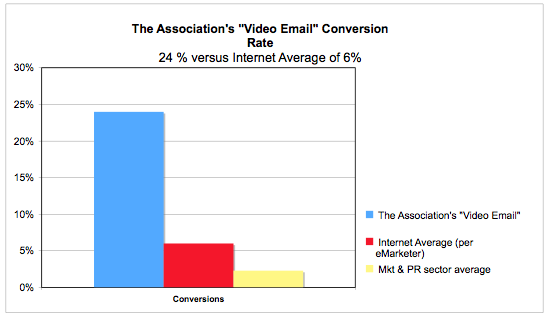
Like to know a secret to improving your email marketing effectiveness? Try including a link to an interesting video. Here’s the lowdown. The Association uses an email service, Constant Contact, to do our email marketing and PR. These marketing/PR emails always include a link to a video.  According to Constant Contact, 23.7% of the people who open our email click the link to play the video. (see BLUE below).

Primary Research

So how does our conversion rate compare to others business sectors who don’t necessarily use video? Our Conversion Rate (in blue above) is 4 times higher than the industry average –(in red above), and 10x higher than Marketing/PR businesses (in yellow above).

How does all this help you?

We create custom video productions that make your email marketing more effective.  People love video.  They’d rather click “PLAY” than read. So, if you want to improve your Marketing/PR email conversion rate, call us. We’re ready to PLAY.

The Thousand Dollar Lunch

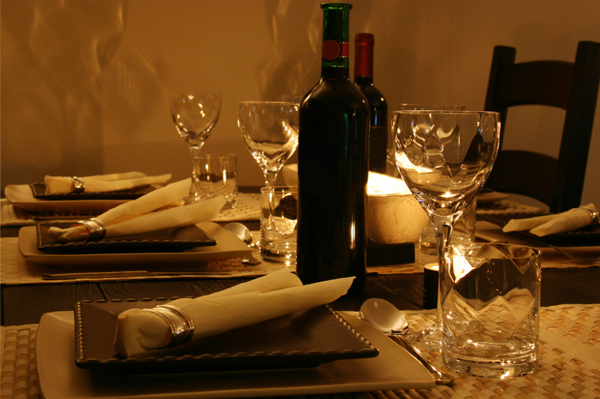
We had the best italian dinner after our tv commercial shoot!

One of the perks of being in the TV Commercials production business is lunch. Sometimes this can be a hurried sandwich-grab and some chips, but not usually. Not if you time your shooting script right. Everyone has heard stories of fabulous wrap parties where tables full of food and drink get consumed and everyone has a real good time. Well, some of those stories are true. I always used to give my crew the best wrap dinner I could, and since we were often in some exotic port or city there were usually plenty of choices. Once I treated them to a “wrap spa” overnight experience in Nagasaki, Japan, including twenty-course gourmet dinner, bottomless Sake cups, massages by blind people and soaking in the natural hot springs of a three-hundred year old resort. But that was just taking our reward for a job well done. Easy to pull off. A great lunch in the middle of a shoot in the middle of the day is a much more subtle and refined art. Possibly the best one ever was the Thousand-Dollar Lunch in Venice, Italy.

The Princess Cruise Line in Venice, our commercial production location

Our video production crew and I were in Venice shooting the Maiden Voyage of the Grand Princess and we had a cute model couple who tootled around with us while we videoed their every move. The way I had come by this couple was a story in itself. The girl, Lisa, was an ex-model and was working in a top talent agency in Miami. I had used her to cast several models I used on a Caribbean Cruise for Celebrity Cruises and in the course of the casting I had gotten to know her quite well. Lisa had told me she was getting married shortly and the honeymoon was all set for somewhere in Mexico.

She was marrying one of the models in her company’s stable named David. When I finished with the Celebrity shoot, Princess called and wanted us to cover the Grand Princess Inaugural Cruise in the Mediterranean (See my other article titled “Midnight Express-Oh!”). They wanted to cast two models to be the focus couple. I called up Lisa and started her casting for this couple. I asked her how her wedding went and she said it was great but the Honeymoon fell through due to something or other with the resort.

That’s when I got this great idea.“How about a two week honeymoon on a luxury cruise in the Med, I said, all expenses paid!” Well that wasn’t too difficult to sell. She and David were thrilled with the idea. I knew they would be a good addition to the crew. (Not always the case. See previous article  “Smooth Shooting on Rough Seas”). The fact that I would be saving lots of money on models fees didn’t hurt. So off we went to Europe, and to this day David and Lisa get out the video we made of the trip and play it on their anniversary. Probably the best Honeymoon Video ever made.
And that brings us back to the Thousand-Dollar Lunch.
David and Lisa, during tv commercial production
Venice is probably the most photogenic city in the world and we “shot the sh@t out of it” as they say. We shot David and Lisa in a gondola, David and Lisa in St. Mark’s Square, David and Lisa in a vaporetto on the Grand Canal. We were being escorted around in a beautiful vintage motorboat with a lovely Italian guide, all courtesy of Princess Cruises. When it came time for lunch, the driver of the boat said he knew just the spot. Yes he did.

We tied up at a picture perfect Italian Trattorria right on the Grand Canal. Grape vines were hanging over the trellises, the waiters were all dressed up, it was something right out of a promotional video. Hey, wait, we’re shooting a promotional video! So we just kept rolling. The Maitre’ D graciously opened the gate leading to the patio for our couple. They were given a romantic table right on the canal, they had pasta and wine and desert all served by the waiters straight out of Central Casting and we rolled on the whole thing. Of course, we all had lunch right next to them, just out of camera view. And what a lunch!

Unbelievable pasta, seafood and wine – it just kept coming. I’m sure we were there for nearly three hours. When we finally got the bill, it came to a few million Italian Lira. We really couldn’t figure out exactly how much it was, but we knew it wasn’t going to be cheap. When we finally did the math it came in at just over a grand. But we were in high spirits (not to mention the wine consumption) and we had gotten some absolutely gorgeous shots of the couple having a romantic lunch on the Grand Canal in Venice. “Come on”, I said to Jack, our Princess chaparone, “look at it as a location fee.” And that’s just how it appeared on his expense account. To be honest, shooting a similar scene in Venice, California would have cost twice as much and we wouldn’t have gotten lunch!! And really, if you are going to set a record for most expensive location lunch ever (this was just a crew of five) what better place to do it than Venetia! Molto Bene!  Here is a video clip of David and Lisa in Venice.

Commercial Production for Princess Cruise Lines: The Caribbean Cha-Cha

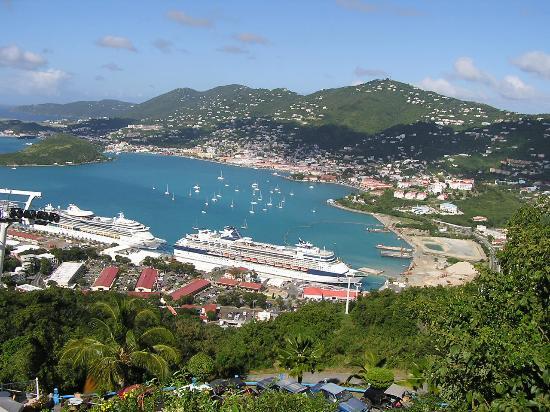
St. Thomas, where  tv commercial for Princess Cruises was shot
When shooting custom video productions on location, always be open to the serendipitous event. (This applies to any vacation as well as filming on location.)

By this I mean: have a definite plan, but be alert for those golden opportunities that might present themselves along the way. The key to this openness is to be absolutely locked down in your prep. Only in this way can you have the freedom to know how much leeway you have for “audibles”, those deviations from the plan that sometimes yield the best shots in the film that fit perfectly into the clients marketing development strategy. This prep often includes a scout. I do this whenever possible. If there is one thing I’ve learned about locations, it’s that nothing is ever what you expected it to be. The idea is to be prepared down to the last detail and then be completely flexible. I learned about these two seemingly contradictory things on my very first major film shoot. This was a custom video production to create a promotional film for Princess Cruises, to be shot mostly in the Caribbean, starting with the major port city of Charlotte Amalie on the island of St. Thomas.

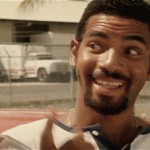
Actor and guide, in commercial production

We arranged to scout this island and arrived looking for a place to rent a vehicle. As we walked off the ship, we were greeted by the usual mob of tee shirt-selling, wildly gesticulating locals all vying for our tourist dollars. One guy separated himself from the pack and somehow got our attention. “What you need, mon?” he asked. I tentatively muttered something about a place to rent a scout vehicle but all the while I was craning my neck trying to find the “authorized” Princess tram into town. “No problem,” the guy said gesturing to his vehicle, “get in the Jeep.” Wondering how much this was going to cost and exactly where we would be taken I stalled, looking around for something a little more conservative. But this was Cha-Cha (we learned later) and he didn’t suffer foolish tourists well. “Get in the F—ing Jeep!” he commanded, and we had to obey.

Riding into town we explained to Cha-Cha why we were there. He turned out to be a goldmine of information and, as promised, took us right to the best Jeep rental place in town. Cha-Cha pointed out some of the better spots to shoot on the island and told us about some of the pitfalls to avoid. He turned out to be a very cool and intelligent guy who aspired to be a standup comedian and worked the comedy clubs in town at night. He was also no stranger to film production. I arranged with him to help us when we came back to shoot and to transport us around St. Thomas at that time. He promised to meet us with his cousins and plenty of vehicles.

Three weeks later I and our video production crew were back in St. Thomas with a couple of models and a full shooting crew. Sure enough, Cha-Cha and his cousins met us at the dock and we were off on a very full schedule of filming all around the island. Thanks to our previous scouting, we knew exactly where to go and in what sequence to shoot in order to maximize our time. By early afternoon we had captured all our necessary shots and even had time for a nice Caribbean lunch. (See a similar article, “The Thousand Dollar Lunch”.) Since I had the leeway, I could shoot an unscripted idea I had to utilize Cha-Cha and his unique bartering skills to start off our film. If I could capture on film my own fears when Cha-Cha first approached us, I could effectively contrast this with the comfort and security of a Princess Cruise. If it worked, great. If not, nothing ventured nothing gained.
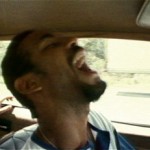
Actor and guide in our tv commercial production

The final result was actually better than I expected. Using his innate acting skills, Cha-Cha terrorized our dazed and confused model couple and whisked them off to a broken down motel in the middle of nowhere. This dramatized the danger and uncertainty of a “land based” vacation in a very funny way. When contrasted in the film with the same couple enjoying the luxury and ease of a Princess Cruise, the comparison was easily and humorously made, and the audience put in just the right mood. Cha-Cha turned out to be the best thing about the whole experience (if not the film!) and for years travel agents referred to that Princess film as “the one with the laughing cabdriver”, even if they remembered nothing else about it. So thanks, Cha-Cha, wherever you are, for helping jump-start my career. I hope people are still getting in your F—ing Jeep. I’m sure glad I did! Below is the video of Cha-Cha doing his thing.

Custom Video Production for Duty Free Shoppers


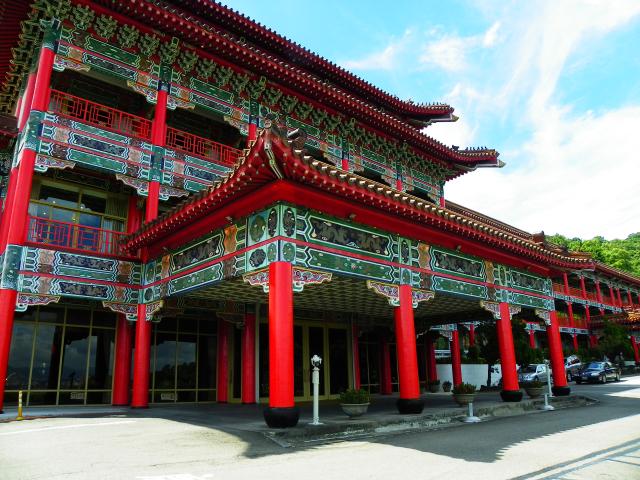
Grand Hotel Taipei, the site of our tv commercial production

Corporate Video Production Services

So there we were, in the Grand Hotel in Taipei, using a child’s wading pool to catch the water our shirtless production manager was pouring down his back so we could get a light reading in the candle-lit room. Unexpectedly, the room service boy walked in and we could tell by his horrified expression that we had exceeded his wildest nightmares of gay-porno-Hollywood-weirdo-filmmakers abusing the sanctity of his beautiful hotel. Obviously, it was all just a cultural and technical misunderstanding, but we could tell by the fear in his eyes that he was ready to bolt for security. How we got to this point is an interesting story.

Back in 1995, Duty Free Shoppers asked The Association for a custom video production. We decided to create a spectacular wall of video that would captivate free-spending Japanese visitors and entice them into the DFS store. We were to spare no expense, which meant 35mm film, Taiwanese movie stars, fantastic locations, helicopter aerials, etc. We came up with a proposal to create a stunning visual montage of nightlife, high-end products, and, we were instructed, some golf.
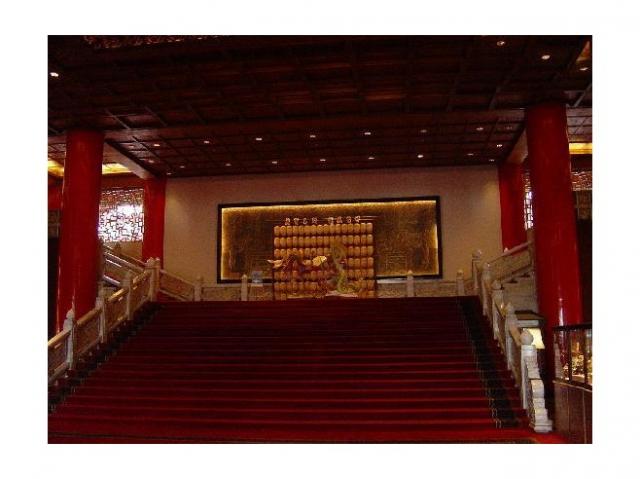
Grand Hotel Staircase, near our commercial production

Armed with an ambitious shooting script, I and our video production crew flew into Taipei, the capital city of Taiwan, and took a shuttle to the Grand Hotel, a beautiful period piece constructed by the wife of Chang Kai-sheck as a monument to the greatness of Chinese culture. It really was lovely, evoking the glory of ancient China, and we used it as a set for several of our scenes.

But we found that location production in Taiwan promised to be supremely difficult. For one thing, few people spoke English and all of the street signs and store names were in Chinese characters. In Mexico, France, Italy, etc. you can kind of make yourself understood with a sort of Esperanto mix of all the languages. Also, the signs are readable, if not understandable, which honestly helps a lot. Not so in Taipei. We got so lost on our first cab sortie into town that we had to tell our driver to take us back to the hotel. When he obviously didn’t understand what we were saying, we knew we were in trouble. Finally we spotted the hotel and with much grunting and gesturing finally got him to deliver us to the door, empty handed but glad to be back. We realized we needed help. That’s when we lucked into the one person who turned what could have been a nightmare shoot into a dream: Alice Lim, our Chinese translator with the Scottish burr.

Alice worked at a commercial productions company in Taipei, and when we talked with her on the phone we couldn’t believe such a pure Scottish brogue could come out of what she referred to as a “Chinese Face”. We never did get used to that. She was of Chinese descent but grew up with her family in Glasgow before coming to Taiwan. She spoke Mandarin as fluently as English. We were completely lost without her. Fortunately, she was as familiar with film production as she was with the ins and outs of Taiwanese culture. So with Alice as our guide we proceeded with several weeks of relatively trouble-free production in and around Taiwan. That is, until the unfolding of the events described in the first part of this article.
A Shot from our tv commercial production

The whole idea for that shot was to have a beautiful Chinese girl sensually bathing herself in a beautiful room full of antiques and candles. The model would only be seen from behind and only waist up, hence the kiddie wading pool to catch the water. The candles were lit, and as the makeup girl prepped our model in the bathroom, the production manager stripped down, assumed the position in the pool, and slowly poured some water down his back from a beautiful glass pitcher. We were getting the right f-stop when the room service boy walked in. His eyes instantly became three sizes larger and we all got the image that he was looking at. Of course there was no use saying, “No, no, it’s not what you think!” in English.

Fortunately, Alice popped out of the bathroom and quickly explained the situation, thereby averting an international incident and new low in American-Taiwanese relations. The shoot went on and the result was a spectacular asset to Duty Free Shoppers market development strategy. Gan bei, Alice, gan bei.

Canon HDSLR Report from the Trenches – Shooting with Canon’s EOS C300

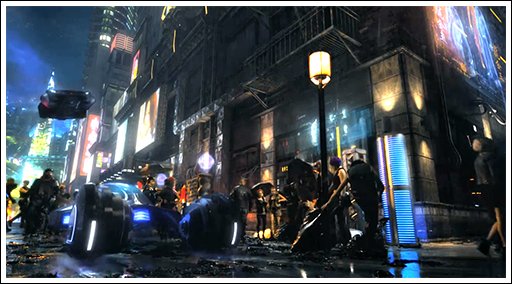
 Scene from XXIT Shot with Canon's C300
A scene from ‘XXIT’

I recently had the chance to meet Dana Christiaansen, Director and Director of Photography, at an event where he shared his first-hand experiences shooting with the new EOS C300 for Sam Nicholson’s new digital film, ‘XXIT’.   Dana’s report is revolutionary! You’ve got to hear it for yourself.

Which is why I invited him to come to our next Canon Boot Camp on Dec 10th!  Yes, Pro Level I  students have the chance to hear direct from Dana how he’s used this amazing camera and ask him their questions.

What’s the catch? Well, you have to attend the Pro Level I canon camera class for starters. If you haven’t been to one of our Canon certification boot camps, now’s the time to jump in. The classes are better than ever, with more hands-on experience and more time actually using the camera.

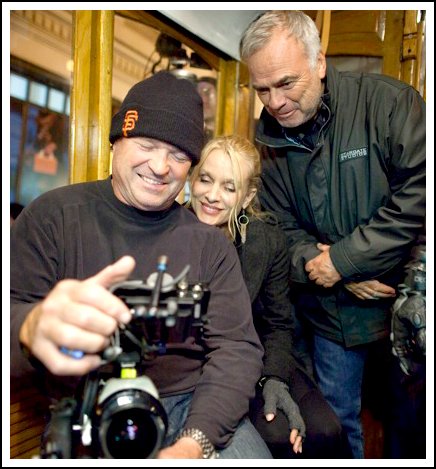
Dana Christiaansen, Nicollette Sheridan and Sam Nicholson check out the Canon C300

Also, since Dana is a working pro, there’s always the chance he’ll not be available at the last minute. That’s the second potential catch. We sure hope he can make it though, because it’s fascinating first-hand stuff for commerical production, feature film work and especially documentary work.

While we can’t control his appearances, our Canon camera classes are a great value on their own merit. To find out more about the classes, visit www.canonbootcamp.com or contact Trevor at trevor@theassociation.tv.


New Media Marketing and HDLSR Bootcamp Classes

Canon Boot Camp

For over two decades The Association has provided cutting edge marketing and advertising services. The core of our service policy is to get results, which is why we have been in business for so long. Client feedback is very important. Whether it’s about our Optimized Market Research, direct response TV ads, New Media Marketing or our famous Canon Boot Camp, please take a moment to share your experience.

The Association reserves the right to use client feedback in our promotional campaigns as well as for Quality Control purposes. Submitting feedback through this form is considered an “OK to Publish.” If you would prefer feedback is not made public, but would still like to provide feedback, please email trevor@theassociation.tv directly. Thanks!

Boot Campers: Include a link to your latest DSLR Project so we can share it with the world!

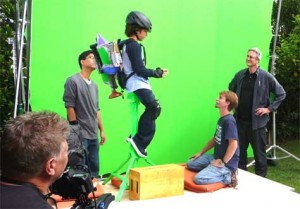
Canon DSLR 5D passes Green Screen Shoots with Flying Colors!

Canon HDSLR 5D Green Screen TestYou might hear opinions that the Canon DSLR 5D’s 4.2.0 color space can’t deliver good keys for green screen. Well, here’s the word from the trenches. Something you can count on. The Canon DSLR 5D Mark II’s green screen shots keyed beautifully. (for more data on 4.2.0 color space got to bottom of this article*)
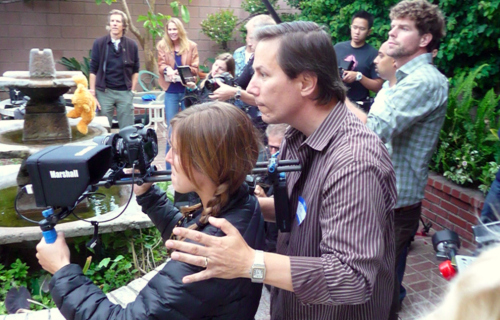
We did green screen tests prior to the shoot and they looked great. So, the client gave us the “green light”.
Green Screen shot with Canon 5D.

Tom Myrdahl, D.P. at The Association (bottom left corner), set up this green screen shot.

GREEN SCREEN LOOKING GOOD…

We shot the green screen on location. The sun was our light source. So we could shoot at ISO 100. White cards below and to the sides of the talent gave a nice edge.

As we tell our students in our Canon camera classes, always triple save your shots. So, while we were backing up the shots onto two other hard drives, we checked to make sure the key was good (see below).

EVERY WEEK A NEW SHOOT…

We are shooting with the Canon 5D or 7D every week. Green screen, under water, on jibs, process trailers, motorcycles…and we’ve been nothing but pleased with the results. Below is The Association’s 2010 Sizzle Reel with both Canon and older formats combined. Look for the underwater slow mo shot (done with the Canon DSLR 5D). It’s fantastic.


THE “LOOK” of 35mm film for half the price…

Our clients love how the Canon maximizes their budget and gives them shots as pretty as 35mm film.

IT’S DIGITAL FILM…

We totally agree with Gale Tattersall (D.P. on “House, M.D.”) and Shane Hurlbutt (D.P. on “Terminator: Salvation” and his famous “The Last Three Minutes”) – the Canon DSLR delivers images that bring the excitement back to fine filmmaking. The Canon delivers rich blacks with no noise in low light conditions.  It doesn’t do “video freak out” when a bright light source enters the frame. It has a delicious, short depth of field. Plus, editing is a snap.  This camera’s a game changer.

YOUR CHOICE: Take our Canon camera classes OR  Hire one of our trained Canon DSLR crews:

1) Learn the Canon DSLR at our Canon Boot Camp (http://www.canonbootcamp.com).

Hands On Canon Camera Classes at The Association
Canon Boot Camp students shoot a script from beginning to end in one day,
practicing what they learned in Pro Level I and II.

2) Or if you prefer, hire a fully trained crew to shoot your next production with the Canon DSLR. Our crews are shooting with it every week.

It’s the future. It’s cool. And it’s here. Tested. Proven. Fantastic.

*….about 4.2.0 color space. The issue is dealt in depth in the blog <http://www.cinema5d.com/viewtopic.php?f=64&p=76648> , but the simple answer is “the workflow that works the best for us (for RedOne and 5D mark II footage) is to transcode the footage to ProRes 4.2.2.    Of course we could do 4.4.4 but we decided that it was a bit overkill, considering the fact that at the end, it will be at best some mpeg4 from the local broadcasters (digital TV).”

“The reason why we convert the 5D files to ProRes is the ability the ProRes has to not deteriorate with generations (renders, movies, etc). Also, when everything is native to the sequence setting, rendering is kept to a minimum. Everything that has to be rendered also (subtitles, texts, pictures, etc) all look better when working in a ProRes sequence compared when we tried in a sequence with the native clips from the 5D (h264).”