

Introduction to the Canon Boot Camp Reference Manual – Part 1

Canon Boot Camp Logo

Considering signing up for the Canon Boot Camp, but wondering what we cover exactly? Read the Canon Boot Camp Reference Manual and find out!

We are into our third year of training people on the Canon HDSLR. As part of our mission to educate amateur and industry pros alike, we have created a reference manual to accompany our hands-on “Active Learning” method. It was written just before the Canon 5D Mark III came out, so most of the references are to the 5D Mark II. The cameras don’t vary that much in the topics being discussed. A Mark III does shoot at 60 frames per
second and the Mark II can only shoot up to 30 frames per second. Other characteristics mentioned are not that different between the cameras.

The Purpose of the Canon Boot Camp Reference Manual
Canon Boot Camp Reference ManualThe purpose of this reference manual is to prepare students for the Canon Boot Camp, orient you to the HDSLR, and lay the groundwork for the drills we’ll do. It may answer questions you’ve always had about this area. It also includes an appendix with useful information pertaining to the Boot Camp, but the appendix is only available to students who sign up for the two day class.

Have you ever been in a class where the words go in one ear and out the other? That happens when you’re unfamiliar with something the person is talking about. This reference helps keep that from happening. It prepares students for the Boot Camp, orients them to the HDSLR, and lays the groundwork for the drills we’ll do. Download your own free copy of the Reference Manual from our Facebook Page.

Why don’t we just tell you what to do?

We don’t like people who tell others what to do. You’re not a robot. How well you can use your camera depends on your understanding of it. Plus, another person’s solutions may work in certain situations, but they may not necessarily work for you. You should decide for yourself, based on your own understanding. That way you’re at cause over the camera, and not a robot. That’s why we do hands-on learning with our course checklist.

You’ll “learn by doing.”

Lectures can be boring. We take a different route to learning—a revolutionary route. The Canon Boot Camp is all about you learning the camera by doing drills. Doing the drills ensures that you understand and can apply what you’ve learned.

What is a checklist?

When you take the Boot Camp, you’ll be given a course checklist—a list of the steps you’ll take to complete the Canon Boot Camp Pro Level One. We’ve included a checklist for this Reference Manual too. It’s designed so you can go through it at your own pace and understand each step. the classes are a lot of fun and I hope we’ll see you at the next Canon Boot Camp.

What’s the end result of the Boot Camp?

It’s simple—the end result of the Boot Camp is a student who knows and can successfully apply the knowledge contained in this course to operate the Canon HDSLR effectively. But don’t take our word for it! Our graduates will be happy to tell you themselves:
 

How to Beat Consumer Advertising Overload and get Your Message Across

In these modern times, every step seems to bring us vis-à-vis with yet another advertisement. Some ads are cool, some are boring and some are lame, but we are subjected to them just the same. I’ve heard the average American will see 3,000 to 6,000 marketing messages just in a day.

Whole industries have come about just to help us avoid getting interrupted. The latest I’ve heard about is The Hopper, from Dish.com.

This DVR can record up to 6 HD channels at once and skip ads altogether. No more fast forwarding. Cool! Now if I only watched TV, maybe I would get one. But my point is this; it’s only a matter of time before consumers fight back when they are constantly interrupted in the middle of something they like. This puts advertisers in a difficult position, apparently. The old method of advertising, the “tried and true” is to interrupt your victim briefly with your ad in the hopes that he or she will bound to the telephone and immediately purchase.

That is, if they aren’t interrupted by another ad while on the way to the phone.

How in love are people with being constantly interrupted? I don’t know of anyone who enjoys interruptions. So how to get around it?

By using the two biggest tools in your marketing arsenal. If these two big guns are sitting on a shelf in your closet, it’s time to get them out and dust them off:

  1. Google Search
  2. Email Newsletters and Event Marketing

Google Search

Search the World with GoogleIf you have a person who’s able to access the World Wide Web, you have someone who’s at least somewhat familiar with searching on Google. Pretty much regardless of age. They may not know all the tips and tricks of search, but they know they can write what they are looking for in the little white box, and get a bunch of instant (and free) answers back. There’s only two questions you need to be able to answer “YES!” to after that search happens:

  • Do you know what search terms your potential customers use when Google searching for a solution to their problem? A solution they would pay you to provide if they could find you?
  • Does your web presence show up in the top 10 results for search phrases relevant to your business?

Google search is an important tool because everyone online uses it.

Email Marketing

Email Marketing Keeps you in Touch This one is even more important if you’ve been around for awhile and have an existing customer base.

Ask yourself: What’s the first online tool you wanted to have that would allow you to communicate almost instantly with other people, instead of waiting for a letter to be mailed across the country (or across the street).  Did you think of AOL? “You’ve got mail!” Yep, that’s it. An email account, right? Email has been around a LONG time. So long, in fact, that pretty much everyone has an email address, even if they don’t use the Internet for anything else.

An email address belonging to a potential customer OR a past customer is extremely valuable. It puts your company in the driver’s seat because you can reach out and, without interrupting, tap people on their virtual shoulder to remind them you’re available as a resource. If current and potential customers don’t have a way to sign up for information they are interested in, you are throwing money out the window when you market and attract interest.

Email marketing is an important too, because everyone has an email address. Even if they aren’t on Facebook (God forbid!).

Social media is great, but it has a couple of built in problems.  In most cases, the profile accounts are free, so you don’t own your account. It could be deleted at any time. That would be awkward. And the social media landscape is only going to get more cluttered as the “Big Budget” companies crowd in on the small business owners who managed to get social first.

The Solution? Blogs and Email Marketing.

The simple explanation is that blogs show up well in search results (even if you suck at SEO you can still get good results by writing engaging content relevant to your audience).

Email marketing puts you in control and can help you drive business to your sites and offers as long as you have a valid email address and a product or service worth offering.

Stay tuned to this blog to learn more about email marketing and content creation tips, or feel free to comment below with your questions or areas of concern.


Canon Boot Camp: A Shot by Shot

Fletcher Murray, President of The Association

So what do we do at boot camp? What do we learn? How do we learn it? If you had any of these questions in your mind, then you’re in luck! although the class is far more detailed than the breakdown below, this will give you a general idea of how our December 10th Pro Level l day went, so that you can see what goes on in the workshop! 

12:00 – Fletcher Murray, President of the Association and one of the boot camp teachers, introduces himself, his apprentice and aid Celine Duong, and cinematographer Tom Myrdahl. We explain what we at The Association actually do and our boot camp’s purpose. 

12:15 –  Fletcher shows us a video about what the company does with the 5D/7D. Right after that, we ask you what your reason for taking the class is so that we can get to know you and understand your specific needs. 

12:30 – Camera Orientation! Our teachers go through, in detail, the basics of your camera and have you demonstrate as we go along. 

1:00 – Camera Operation! How do you set up your camera to get a good shot? You get to demonstrate this after the lesson to let us know you understood it. 

2:00 – Break 

2:20 – *The Drill* How to keep your cool in a high anxiety situation. We’ll teach you how to stay focused when a producer is on you tail while you’re trying to fiddle with the camera. 

3:20 – Our assistant teacher, Celine Duong, teaches our students how to offload shots to hard drives . 

4:00 – Break 

4:20 – Guest Speaker Dana Christiaansen talks to students about his work, gives us tips, and shows us a cool film he DP’d that demonstrates the EOS C300. Q & A afterwards. 

5:20 –  We  talk to our students about Digital Filming workflow. 

5:30 – We go over a list of things that could really screw you up, and teach you how to avoid them!

5:45 – Time to take your exit exam and demonstrate how much you’ve learned.

6:00 – You’re done. We take a group picture and you get to display you’re awesome certificate.  

Our students left with much more knowledge than they came in with, and were able to demonstrate that knowledge. We really believe in this program, not only because we make sure to include every relevant lesson you can think of, but because it produces great results. We really hope to see you there!

Zabolights Shine at the Canon Boot Camp

Zabolight Logo

As the Producer of our Canon Boot Camp events, I always look forward to the contributions of our sponsors. We just recently added a sponsor, Zabolight, and received two 1X1 panel lights just before our last boot camp. And we put them to good use!

Thomas Myrdahl, our DP extraordinaire, mentioned Zabolights to us after using them on a shoot, which was how we came across them in the first place.

“I used the Zabo lights on a web commercial. We were in a mixed light environment, and the Zablolights with their variable kelvin dial and dimmer allowed us to work fast and keep our look constant. I really like the Zabolights.”  Tom Myrdahl, Director of Photography

Zabolights are getting popular, and for good reason. We really enjoyed having them on the set for the Canon Boot Camp. They are extremely portable and lightweight, being LED lights. The battery pack lasts forever, but you can still use the adapter to plug in if required. The  built in dimmer switch saves us time and being able to dial in more tungsten color or daylight color with a knob is especially handy.

Here’s a short video highlighting a couple aspects of the Zabolight, such as it’s bicolor feature.

When I looked into these lights further, it turns out they are already being used on a number of productions. I just wished we’d heard about them sooner!


What do you get when you put a Canon 5D in the hands of an Adventure Filmmaker ?

You get interesting footage. Or footage of moving people.  But in the case of Dominic Gil, you get interesting footage that moves you. 

“Take a seat,” Dominic says. If you take him up on that offer, you might end up on the beach in Argentina, or in the desert somewhere in Egypt. Does that sound fun to you, or absolutely crazy? Apparently, there were enough crazy (or fun – up to you) people to take a seat on Dominic Gill’s tandem bike to make not one, but three documentaries around his adventure-travel journey.

In his first documentary, Take a Seat: Alaska to Argentina, Dominic traveled on a tandem bike from Alaska to the bottom of Argentina alone, and invited locals to pedal with him. In his second documentary, Take a Seat: Sharing a Ride Across America, Dominic shared the joy of biking with 10 disabled individuals across America, where he learned that “life is full of adventure, but it’s the people you meet along the way that make the difference”.


Take A Seat Trailer from Dominic Gill on Vimeo.

In his upcoming project, Take a Seat: Egypt, Dominic grabbed a bike, and a Canon 5D Mark II, and asked 7 locals to join him on his expedition. Not only does he explore the kindness of humans, but he also learns about Egypt in the midst of revolution.

TAKE A SEAT EGYPT (TEASE) from Dominic Gill on Vimeo.

Dominic came to our June 2012 Canon Boot Camp with issues regarding the Canon DSLR cameras he had encountered while filming Take a Seat: Egypt. Some issues he came across included moiré and lighting in outdoor environments. Our Chief Instructor, Fletcher Murray, and the Canon Boot Camp Team addressed his questions during our two-day workshop. He also walked away with in-depth knowledge of the camera’s complex menu options.

Hear what Dominic has to say about our Canon Boot Camp:

Dominic Gill's experience at the Canon Boot Camp from The Association/Canon Boot Camp on Vimeo.


Take A Seat: Egypt airs October 2012. See what amazing challenges Dominic put his 5D Mark II through and watch his adventure unfold through beautiful imagery. 

Meet the latest HDSLR Master, Christopher Smith

Chris Smith at the Canon Boot Camp from The Association/Canon Boot Camp on Vimeo.

Our Canon Boot Camp caters to many types of people: the inspiring director, the cinematographer, the industry pro, the teacher, the student, the still photographer, and the hobbyist. Though they come from all different backgrounds, our participants have some things in common. They are curious, eager to learn, and they all walk out of our Canon Boot Camp a Canon HDSLR Pro.

Christopher Smith is a reality show editor. Essentially, he’s a storyteller. Currently the editor of the Tia & Tamara show, Chris aspires to be a director. Before taking the leap, he wanted to master the Canon 5D Mark II to be able to offer his team guidance in terms of technology and aesthetics. Chris came to our Canon Boot Camp a week after buying his Mark II and became a pro in two days. At our boot camp, he learned everything from setting his camera menu for optimal video performance, to lighting and composition. Being one of the less experienced participants, Chris made connections with his fellow-classmates, which included directors, filmmakers, and producers. Having a strong sense for storytelling, Chris now has the technical background to ensure him a successful career:

“I definitely liked the Boot Camp, especially someone with no experience. It taught me more than I could have expected.”


What I learned from dogs about the internet

If you’re wondering why the Internet isn’t bringing tons of business to your door you’re not alone. Most people we talk to feel the web isn’t living up to their expectations for new business.

A lot of people embraced the Internet and it’s promise of a new life with abundant cash flow. Most of us suffered through a huge learning curve to master new terms and technology to be able to “surf the web”.   Then, NOTHING but the sound of crickets!

Why?

Well it makes us feel naive, but putting our website up was like taking out a single line ad in the New York City Yellow Pages and expecting business to flock to our door. You can find the shocking news on the Google blog site <http://googleblog.blogspot.com/2008/07/we-knew-web-was-big.html> which says that a year and a half ago Google crossed a huge milestone of 1 trillion (as in 1,000,000,000,000) unique URLs on the web at once!

So I hope you see the task ahead if you want to be found on the web.  You have to be more relevant. You have to increase your presence on the web. And now we come to dogs and what I learned from them.

We all know dogs mark their territory.  The more marks the bigger the dog, or at least that’s what dogs think, judging by the way they pee on everything stationary (and some thing’s not so stationary).

Pepe and MaxSo when Pepe the Chihuahua marks every tree for six blocks he is building his “presence” in the neighborhood. He’s now a big dog even though he’s twenty times smaller than Max, the Great Dane.

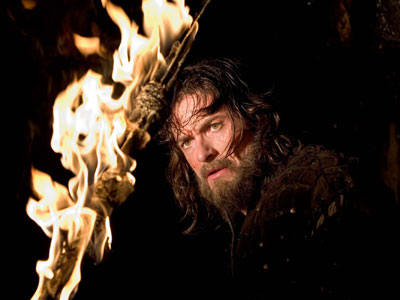
It’s the same game Google plays.  Google doesn’t know how big you really are. All Google knows is how many “trees you marked”. What does that mean?  Make 60 websites? Add 600 pages to you website? No. It’s much simpler than that.

On the web you increase your presence by having lots of inbound links. (Inbound links – d. Inbound links are links from pages on external sites linking back to your site.)

One way to get lots of inbound links is by writing interesting blogs, filled with interesting things that your target audience is interested in. Each blog has a link in it back to your site. You get bigger in Google’s eyes the more people read your blogs and the more they click on that link at the bottom of the blog that drives inbound links to your site.

So if you’re feeling like your very insignificant on the web, write some blogs, and like Pepe, the Chihuahua, you’ll be a big dog in Google’s eyes.  Writing blogs doesn’t have to be hard. We’ve found some easy tips to make blogging a breeze.  Go, Pepe!!

Gloria Baker, Still Photographer, Gets Hands-On at the Canon Boot Camp

One of the wonderful people we had a chance to meet at the Palm Springs Photo Festival in April was Gloria Baker. A long-time still photographer, Gloria is dedicated to her craft and is sought out by companies as AIG, American Express, BlackRock, CR Bard, Fortune Brands, General Reinsurance, KPGM, Louis Dreyfus Group, New York Life, PwC and Pfizer.

After attending our Canon Boot Camp, Gloria had the following feedback:

"Your class approaches different levels…you made a lot of different people with different backgrounds and different experience levels feel like they were contributing…and I think that's a real special aspect of it."
                                                                             Gloria Baker, Still Photographer


We are looking forward to working with more still photographers and increasing their video skills. Join us! We'll be visiting the Brooks Institute in Ventura, CA in August, and most months we have our Canon camera classes at our headquaters in Burbank, CA. Do you have a location that's desperate for HDSLR training? Let us know! Email me at nancy@theassociation.tv with your suggested locations, or comment below.


Still Photographer Takes the Leap to Video at the Canon Boot Camp


In April 2012, The Association was invited to bring the Canon Boot Camp to the Palms Spring Photo Festival and teach still photographers HDSLR video techniques. We had just returned from Prague doing just that, but this was the first time we had worked exclusively with still photographers. It was then we realized our Canon camera classes were probably a vital step up for many still photographers who already knew much about the camera, but not very much about the video aspect of Canon’s cameras. ray_carns

Ray Carns, Fine Art Photographer, signed up for our 2-day course and got his hands dirty with our hands-on training:

“I would definitely recommend it for anyone that’s interested in getting into video.”
Ray Carns, Fine Art Photographer

Ray is a photographer based in Phoenix, AZ. He has shown work throughout the U.S. since 1992, in group and one- and two-person exhibitions. His black and white reticulated images are created using a chemical reticulation process, a process he has used for over twenty years. Ray has recently begun photographing in color, and now, we expect, using video!


Thinking Outside The Box: Lighting A Subject

Jeff Bauer contributes “Thinking Outside The Box,” an ongoing series of short columns covering a wide range of topics within the video world and how to use creativity, ingenuity, and problem solving to achieve unique results across all mediums.

There are so many different ways to light a subject that it would be impossible to list them all out. It depends on aThe Fountain wide range of technical factors such as the the size of your location, the time of day, types of lights, and creative factors like the story genre, and production design. Now if you spent enough time in pre-production, a lot of these details should be available, making a decision on a lighting style much easier.

Once you have enough details from the production, you’ll want to start planning out lighting basic diagrams and figure out where lights should go. I recommend that you watch films in the similar genre that you really like or that were critically acclaimed. Take some notes, scribble some basic diagrams down, and maybe try to recreate a scene that stands out to you. Then watch a few movies from the same genre that you hated or were received poorly. By analyzing the positives and the negatives from each film, you will have a better idea of what what you want to do and how you’ll do it.

Next, it’s important to think about the direction of the scene light and the different types of lights you want to use. If you don’t have any lights to use, you will have to rely on natural light and reflectors to achieve a proper exposure. The classic way to light a scene involves what we call a Key Light, Fill Light, and a Back Light. This describes the main source of light, the complimentary light, and the separation light. Of course how you arrange these lights with determine the type of look a you will get.

Finally choosing hard light or soft light can dramatically effect the way a scene looks. With gels and diffusion, you can create light that is more evenly distributed and softer looking, where as a plain light will cast hard light and in turn hard shadows. There are so many ways to mix and match and combine these techniques into something original, and only with practice will you get better. Go out and shoot something!


To get hands-on training on filmmaking and lighting, come to our Canon camera classes. The schedule is listed on the right side of this blog.