Are you marketing blindfolded?

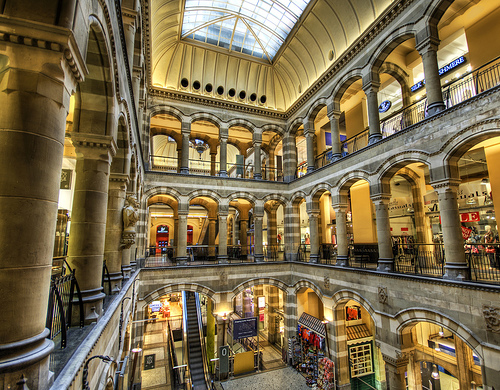
Shopping Malls - Cathedrals of CommercialismIt’s trite to say things are changing, but they are.  The Internet is slowly edging the brick and mortar store toward extinction, although people’s desire for community still prompts them to “go to the mall and hang out”.  And the malls get more and more beautiful. I call them the Cathedrals of Commercialism.

All this leads to the quandary facing many of our clients who want a piece of the web sales revenue. They’re needing successful methods to engage the consumer and make a sale without having to pay through the nose for Pay Per Click.

Long Tail Keyword Research can help help lower your PPC bill. Not many understand Long Tail Keywords. A good example is the difference between searching for “man” to searching for “tall English-speaking single parent wanting single woman with children”.  In other words, Long Tail Keywords are expansions of the core keyword into more specific descriptions.  LTK’s are used by shoppers who are closer to making a purchase. So their searches are for “healthy organic weight control products” and not just “weight loss”.

How do you find the EXACT terms consumers are using to find you? Two sources:

1) Post-Purchase Surveys focusing on “why did you choose our product?”, and

2) Optimized Market Research™ on your target audience.

Post-Purchase Surveys harvest extremely valuable keyword phrases and give you a window into how your consumers think. Not every consumer, just your consumer.  Optimized Market Research™ does both surveys.

Also, unlike traditional market research that focuses on everybody, Optimized Market Research™ zeroes in on the 20% of your customers that produce 80% of your revenue.  The survey is not interested in grouping them into pie graphs, but in listening to what they think and say about your product.  These results are then statistically represented and translated into information that can be incorporated into your marketing mix: verbal content, each person’s emotional profile, the imagery they associate with your product or service are all collated and tabulated.  This is how OMR lets you think and talk like your audience, so you get their agreement to listen to your message.  You’re singing their tune, in other words.

9d208a014d079af4d6f3e50cfff743ab
Most all campaigns fail because they don’t use OMR.  In other words, a company that uses OMR is at the advantage over their competitors. An example of launching a campaign without OMR is the famous story of GM being completely out of touch with their Spanish-speaking customer when they introduced the Chevy Nova.  “No va” means “won’t go” in Spanish.

Another example – we thought we knew our customer. We’ve been in business for 24 years. Grudgingly we implemented Optimized Market Research on ourselves.  Things we considered our top priority were ranked #4 by our customers. “Obviously” our customers wanted top professionalism. They did, but the #1 response to the question “What is the most important thing about The Association?” was “They’re easy to work with.”

Knowing what your consumer is looking for is the key to marketing success. Unless you prefer marketing blindfolded, we suggest marketing with Optimized Market Research.™
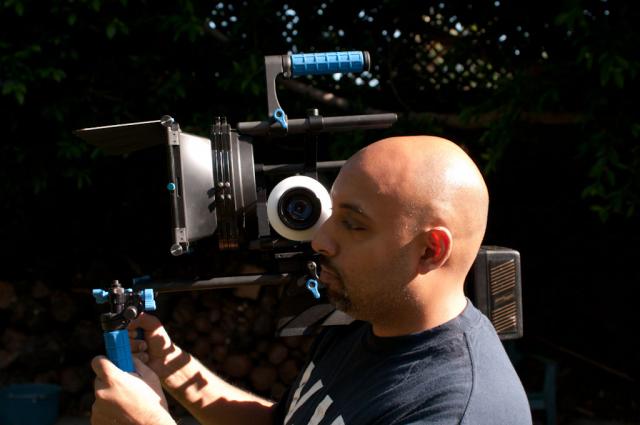
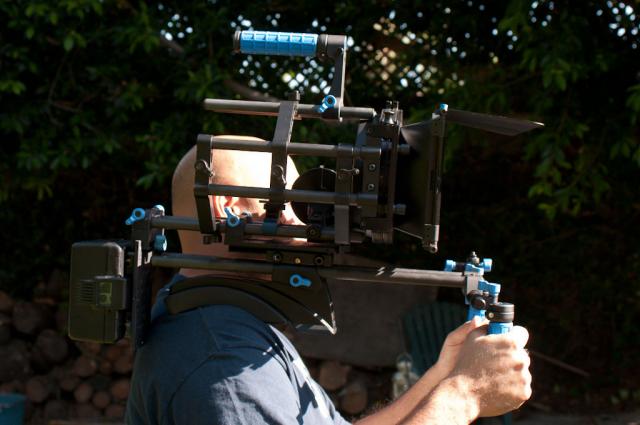
Custom Rig from Red Rock for YTC Films

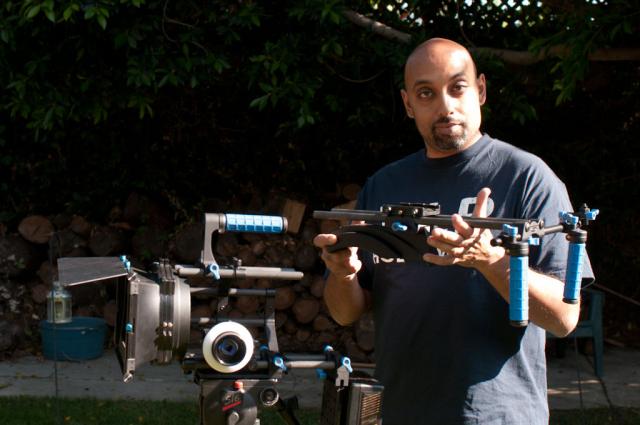
My friend James Wvinner of www.YTCfilms.com needed a Canon DSLR 5D rig that was good for both lock-down shooting on sticks and for handheld.  He was preparing a custom video production for some heavy-duty multi-cam shoots and wanted something that had a lot of possibilities for expansion and space for add-ons.  I contacted Brian Valente from Red Rock to help us out, and he put together a custom rig configuration in no time flat. The way we had the battery plate mounted in the back balances out the rig for shoulder-mount applications, plus the AB batteries can power both the camera and the on-board monitor at the same time.  With a quick release, the rig come apart and plops right into place on the fluid head.  Gotta love it!

I’ll ask James if he can bring the rig into The Association’s next DSLR Boot Camp on August 21st: www.canonbootcamp.com

Custom RedRock Rig
Custom RedRock Rig2
Custom RedRock Rig3

Here’s how Brian put it together:

From RedRock Micro store http://store.redrockmicro.com :

DSLR Cinema Bundle

microShoulderMount Deluxe Bundle

microBalance Plus plate

microLensGears

microArm short

microMount for monitor


Anton Bauer battery power http://www.antonbauer.com :

AB Plate is either AB part number QR-SP200 or QR-SP400A

You need specific AB screws – the AB part number for the screws is 6120-5522Battery


Connector cables:

Canon DC coupler http://www.bhphotovideo.com/c/product/590425-REG/Canon_3352B001.html

Plus switronix Dtap adapter http://www.bhphotovideo.com/c/product/655669-REG/Switronix_XP_DSLR_C.html


Misc:

Bogen quick release  for between shoulderpad and cinema bundle

http://www.bhphotovideo.com/c/product/554151-REG/Manfrotto_357_357_Pro_Quick_Release.html


Acquiring Customers Though Customization

While making lunch today at home, I happened to catch a re-run of some “news” by CNBC. The story, titled “Coca-Cola: The Real Story Behind the Real Thing,” originally aired, as far as I can tell, November 2009.


Feel free to check out the video of the machine at the link above. For the quick Reader’s Digest version:

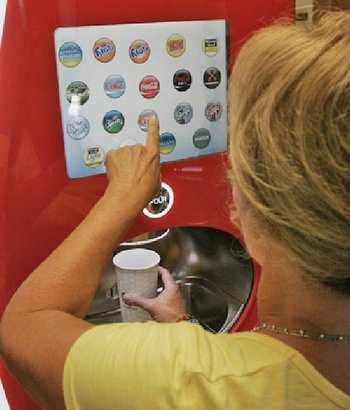
“CNBC also looks at the company’s latest hi-tech contribution to beverage technology: the Freestyle Jet Machine-a next generation “soda fountain on steroids” that puts buyers in the driver’s seat. With a sleek design and touch screen technology, consumers can custom-make drinks to satisfy their own taste buds by blending up to 104 variations of Coca-Cola’s sodas, juices, teas and flavored water. And, while buyers are filling their cups, the Freestyle is funneling priceless data to Coca-Cola headquarters about how much and even when each drink combination is being poured. It’s marketing treasure for Coke.”

This was the first I’d heard of the “Jet,” as it’s called. My first thought was how customized the soda machine was for the consumer. It provided exactly what each person was looking for, without having to look anywhere else, which is just brilliant. That got me to wondering where the word “customized” came from. I have a thing about understanding words, and a side hobby is checking out the etymology of words we all use every day.

From Dictionary.com:

cus·tom·ize

“to modify or build according to individual or personal specifications or preference: to customize an automobile. “

Curious as to how that related to “customers,” I looked that up and found a passage of interest from Wikipedia:

“The word derives from “custom,” meaning “habit”; a customer was someone who frequented a particular shop, who made it a habit to purchase goods of the sort the shop sold there rather than elsewhere, and with whom the shopkeeper had to maintain a relationship to keep his or her “custom,” meaning expected purchases in the future.”

Obviously the whole goal of marketing and advertising is to acquire customers who continue to come back, i.e, to create ongoing relationships with customers. Coca Cola has done a great job of making it easy for the customers to participate with their product by creating the Jet, which also reports back excellent marketing data (what sodas customers are requesting from the machine). This kind of consumer analysis helps dial Coke right in to the minds of their best customers.

The question is, is there a way other companies can create similar relationships without spending millions of dollars? Why yes, there is.

It’s no secret that The Internet has connected the world. And a lot of us get our information from searching online. This has resulted in consumers educating themselves right up to the point of purchase, before a call is made or before a visit to a brick and mortar, credit card in hand.

Here’s the key word: Search.

Help a consumer out. Create content your consumer wants (the drink). Organize your content so it’s easy to find and access (bright colored soda machine with a display of everything that’s available). Luckily we already have Search Engines like Google to help consumers find the content. Whether or not they find your content depends on a lot of factors, not all of which I will try to cover here.

Suffice to say, organize your content in such a way that the Search Engines can easily serve it up (make it easy for Google, in other words), as well as match what the consumer is looking for (match their search phrases), and you’ll give yourself a leg up over the competition. And no, I’m not referring to expensive Pay-Per-Click campaigns. I’m talking about something we call “Topic-Optimized Marketing” that utilizes long tail keyword research.

For more information on this market development strategy, click on the button above to join The Association’s mailing list, or request a free consultation with me (or both, hey, I’m easy). We can help you come up with a custom and an effective marketing plan to fit your company’s budget.

Welcome to my Blog!

Trevor Eisenman, Association Social Media StrategistThe Association is here to help business owners who are tired of promoting like crazy, making 100′s of phone calls and end up getting stonewalled by the deflector shields of their target audience.  Wondering if there is another option to expensive Pay-Per-Click Campaigns? There is!

Qualifed and educated customers new customers CAN be acquired with less effort and cost.

This blog explores different options available for new customer acquisition. Fortunately, one of my jobs at The Association is to “translate” online advertising and promotional tools (and other related elements) into plain english.  I deliberately avoid being over-techincal with terms and try to use lots of stories or analogies.  Pictures and charts too if I can get them!

Confused about all the online options available? Check out our other blogs and get some answers.  Can’t decide what to do? Then get more information! Call us, we can help.