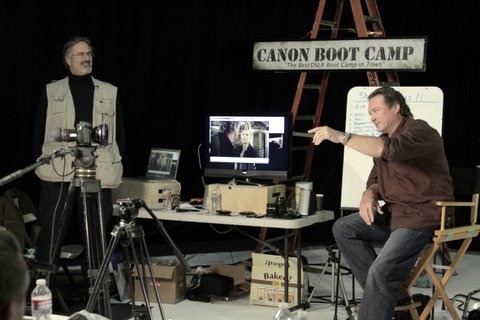
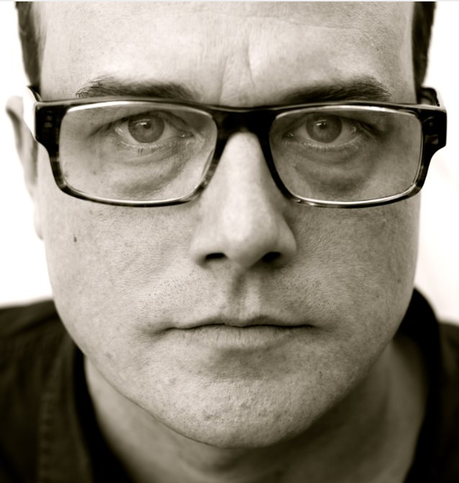
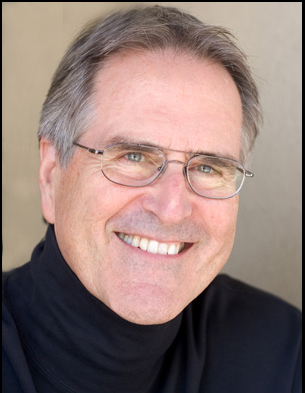
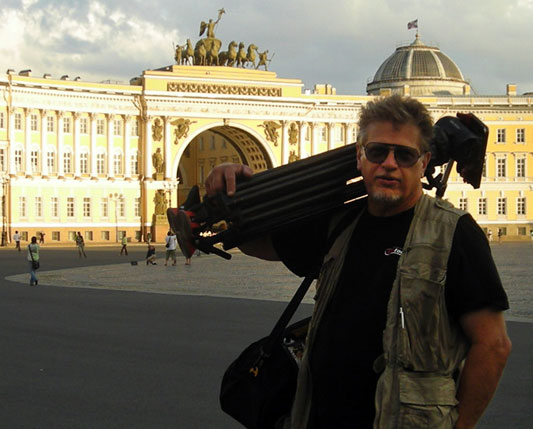
Our December Canon camera class Pro Level I students were treated to special guest speaker Dana Christiaansen, who shared his experiences working with the new EOS C300. Dana has extensive experience shooting commercial productions for car brands such as BMW, Suzuki and Scion, as well as others.
Dana Christiaansen, DP visits the Canon Boot Camp Pro Level I
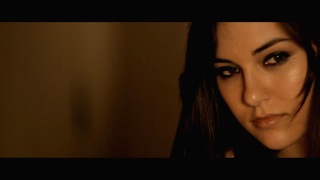
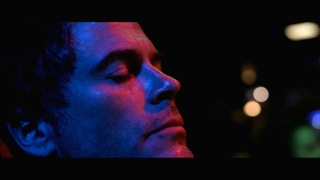
Dana gave us a taste of what it was like to work with him on the short film directed by Sam Nicholson, ‘XXIT‘, shot with the C300. Basically, you have to be ready to run! Keep an eye out for Part 2 and Part 3 where we explore technical aspects and lighting with Canon’s C300.
To see Part I of Dana’s talk, click on the video below:
The rest of Dana’s filmography and videos of his works as a cinematographer can be viewed online.
Interested in more tips from the trenches? Come to our Pro Level I & II Boot Camps! The next one is in just a few days, on January 28th, where Eric Schmidt will be sharing his first hand experience in shooting feature films with the Canon DSLR 5D and 7D.
I know it is hard to believe but I didn’t win the lottery…again. I thought I’d try to win without playing my kids’ birth dates for once. Oh well. Not that I play every weekend. I’ve gambled on the lottery maybe ten times in the last ten years. I don’t feel bad about it. Five bucks now and then has about as much chance of paying off as money invested on Wall Street. We all used to believe that we had to have a portfolio of investments. Many of my friends and family saw their investments disappear. We’re in baffling times.
More baffling to me is why companies gamble on commercial productions they put on TV. Especially now, when every dollar really counts! Judging from the ads, these companies skip all the vital steps to making an effective direct response TV ad and then wonder why it doesn’t pull leads.
What do I mean by vital steps? Well for one thing, know your target audience, thoroughly. Not just the demographic. Know what imagery they’re receptive to. Know what they “think” about products or services similar to yours. Know what about your product or service they will respond to positively. Know what emotion your target audience is sitting in. Know what words and phrases they agree with. These are just a few of the things we research.
If you don’t know these things before beginning the creative part of making a custom video production, you’re going to miss your target audience. You’ll disconnect with your audience to a greater or lesser degree. Like the guys who marketed the Chevy Nova in South America, where “No Va” means “won’t go”. Duh.
Here’s another example. We’ve had clients come to us with a product named Klimadynon. It alleviates discomfort during menstrual cycles. We tested some alternate names and renamed the product so it didn’t communicate that it was for women who act like a dinosaur now and then.
If you don’t know your audience you’re wasting your money. You’re not just losing sales, you may be driving them away! If you don’t know your target audience you’ve reduced the chance of your ad being effective by 70%. It’s like playing darts blindfolded. You can’t see the target. How do expect to hit a bull’s eye? We see advertisements on TV all the time that miss the target audience. They don’t cause the phone to ring. The sponsor has wasted his money. Is there a better way? You bet ! We’ve used it for years on our corporate clients and we started using it on our TV commercials. It’s proven and scientific. It takes the guesswork out of marketing.
All advertising is a gamble. Our proprietary methods put the odds in your favor. Otherwise, you may as well play the Lottery. Your chance of winning is lousy but at least you’re not throwing away so much money. A better way to go is to find out how we can help you win with an effective marketing plan. It’s a sure bet.
So what do we do at boot camp? What’s a typical workshop like? If you had either of these questions, then you’re in luck! Although the class is far more detailed than the breakdown below, this description will give you a general idea of how and what we learn about our DSLRs. This is how our December 10th Pro Level l day went:
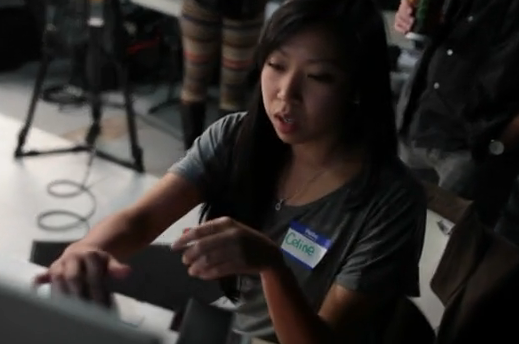
12:00 – Fletcher Murray, President of the Association and one of the boot camp teachers, introduces himself, Celine Duong, and cinematographer Tom Myrdahl. We explain what we at The Association actually do and our boot camp’s purpose.
12:15 – Fletcher shows us a video about what the company does with the 5D/7D. Right after that, we ask you what your reason for taking the class is so that we can get to know you and understand your specific needs.
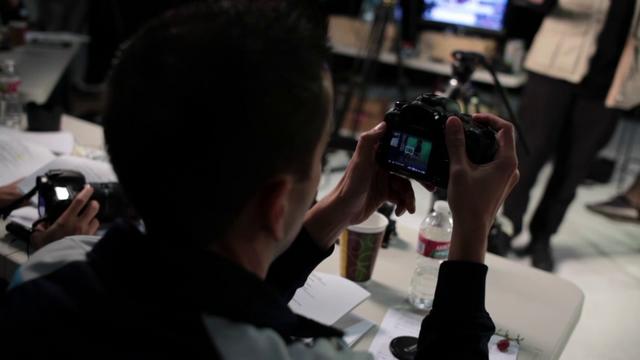
12:30 – Camera Orientation! Our teachers go through, in detail, the basics of your camera and have you demonstrate as we go along.
1:00 – Camera Operation! How do you set up your camera to get a good shot? You get to demonstrate this after the lesson to ensure full understanding.
2:00 – Break
2:20 – *The Drill* How to keep your cool in a high anxiety situation. We’ll teach you how to stay focused when a producer is on you tail while you’re trying to fiddle with the camera.
3:20 – Our assistant teacher, Celine Duong, teaches our students how to offload shots to hard drives.
4:00 – Break
4:20 – Guest Speaker Dana Christiaansen talks to students about his work, gives us tips, and shows us a cool film he DP’d that demonstrates the EOS C300. Q & A afterward.
5:20 – We talk to our students about Digital Filming workflow.
5:30 – We go over a list of things that could really screw you up, and teach you how to avoid them!
5:45 – Time to take your exit exam and demonstrate how much you’ve learned.
6:00 – You’re done. We take a group picture and you get to display your awesome certificate.
Our students left with much more knowledge than they came in with, and, more importantly, were able to demonstrate that knowledge. We really believe in this boot camp, not only because we make sure to include every relevant lesson you can think of, but because it produces great results. We hope to see you there!
To find out more about The Association, custom video production or the Canon Boot Camp, visit our website or call us at 818-841-9660. The updated dates and times of our most recent upcoming boot camps are on the right side of the page.
The Association’s Canon Boot Camp has a special guest scheduled for Jan 28th’s Pro Level I class.
Eric Schmidt. Though you may not recognize the name, you will certainly recognize the work. Having DP’d commercials for Miller Genuine Draft, Snapple, Toshiba, and Verizon as well as music videos for Coldplay, Michael Jackson, Adele, The Flaming Lips, and Beck, his body of work is not only impressive, but an integral part of pop culture.
Foo Fighters’ music video “Best of You“, which he filmed with director and oft-collaborator Mark Pellington, won an MTV music video award in 2005. A year earlier they earned an ASC Outstanding Achievement Award for their work on the TV series Cold Case. Obscure, he is not.
The imagery in Schmidt’s 2011 movie I Melt with You, starring Rob Lowe, Jeremy Piven, and Sasha Grey, is even more striking than his otherwise mainstream work. A story about three 40ish best friends who find themselves revisiting a disturbing pact made years earlier, Schmidt’s cinematography creates a world of chaos, depth, and strange beauty.
A core belief in the filmmaking world is that the image is universal. A film should be able to tell a story without the use of dialogue. If that is true, then Eric Schmidt has succeeded without question, which is why we’re eager to hear what he has to say to our students at the January 28th Pro Level I Canon Boot Camp.
Eric will be giving our students advice, answering questions, and talking to us about using a DSLR, which he used to shoot I Melt with You.
“The freedom to shoot handheld, to crouch down, to throw it under your arm, switch shoulders or stick it out of a window was the greatest part of shooting with [DSLR]” says Schmidt in an interview with HDVideoPro.
Anyone interested in getting trained on the Canon DSLR 5D & 7D can find out all about our Canon camera classes by visiting canonbootcamp.com for the next event dates, or click on the links on the right of this blog for a specific upcoming class date.
Celine Duong is one of the busiest creatives at The Association, and it’s clear that she’s dedicated to the work and her students. We sat down with the 23-year-old production junkie and talked with her about how she got her start, and what she loves most about the Canon Boot Camp.
Where are you from?
Well, I was born in Paris, France and spent the first ten years of my life there, then I moved to Los Angeles.
What do you do here at The Association?
I’m a Canon Boot Camp Instructor specializing in the 7D, I work in the creative division helping develop scripts and concepts for the film projects we do, and I’m a part of the marketing and promotion division for The Association’s Canon camera classes.
When did you get interested in cameras and film production?
During college when I studied abroad and they wouldn’t let us take the production classes, but I realized that was what I was interested in. You know what they say, you always want what you can’t have. That whole year, I was itching to get my hands on some gear, get some guidance and shoot. So, during my senior year of college I completely focused on production.
I took all the production classes, got an internship, and my life became 100% involved in that field because I wanted to mock-up what it would be to be in that career full-time. It proved to me that it was something I loved to do and was pretty good at, so after college I kept pursuing it in LA. Now, here I am!
What’s your favorite camera?
That’s a hard one! I love DSLRs, especially the 60D, the Canon 5D, and 7D. My favorite camera would be a hybrid/unborn child of a 5D, 7D, and 60D. I love the look of the 5D so I want its huge sensor so that I could get the shallow depth of field, the 7D for its slo-mo capabilities, and the 60D for its flip-out monitor. So technically my perfect camera doesn’t exist… [laughs].
What’s the most exciting project you’ve ever worked on?
I worked on a documentary as a camera operator with my 7D, where I filmed at a camp for underprivileged student-athletes. The camp provided them with activities and education that taught them that they were more than just their athletic ability. By the end they had turned into well rounded young men and had such confidence. I was only filming them, but I really felt like I had become a part of their transformation. That was really special for me.
What is the best part about The Association’s Canon Boot Camp?
Our caliber of students is evidence that no matter how experienced you are, you can always learn something new. For example, the DP for Texas Chainsaw Massacre is a past student. We get to teach pretty knowledgeable people a new skill, which I think is really cool.
On the other hand, and just as exciting, are the students who have absolutely no experience. There was a past student who took his camera out of the box and literally did not know how to turn it on. By the end, he know exactly how to operate his camera, all the ins and outs. We have many students from both categories and the pace of the class seems to be right for everyone.
If you have any questions about The Association or want to register for an upcoming Canon Boot Camp workshop, please call us at 818.841.9660, or visit our website. The updated dates and times of the next boot camp are on the right side of the page.
We tracked down The Association’s President, Fletcher Murray, (OK, he was in the next room) and talked to him about his life’s work and dedication to the Canon Boot Camp.
What do you do here at The Association?
I’m the President, Director, and Producer here at The Association. I started out as a still photographer and then as a DP. I love imagery, and at the root of everything, I love to communicate with pictures.
When did you become interested in film what was your first film job?
Well, I made my first film when I was eight-years-old. My career turned upwards in college when I did two films. The first film won a festival. I made another one the next year and it won, too. A producer from ABC saw the film festival results and was intrigued, and thought that he could improve their TV ratings. At the time [ABC news] was ranked number two in the market and they wanted to go for number one. They thought that if they put an interesting little piece at the end of the news each night it would draw more viewers than just more of the same format.
So I was hired to be sort of an Ansel Adams, film student, Charles Kuralt, film guy [laughs]. And so my only directive was “Go shoot cool, unusual stuff and we’ll put it on the news and see how it works.” For example, I would shoot slow motion shorts of kids running in the park in the fall with a telephoto lens, playing in the leaves. I would interview toy makers and people who collected historic guitars, human interest stories like that. They pretty much gave me free reign, so I really liked it there.
What is your favorite camera?
I love the Canon HDSLR 5D because it puts so much in your hands for twenty-five hundred dollars. Plus you don’t have to buy film, you don’t have to pay for the processing or the telecine. It can see in low light, which is a lifesaver. The magic things in life happen in areas that aren’t professionally lit by a gaffer, so with a camera this light sensitive, you can come closer to the reality of life. The Canon 5D can shoot up to 1200 ISO. You can shoot fast and the actors are fresh (because they don’t have to wait for the lighting guy to deliver). So it’s made it very magical. You can shoot almost as fast as you can think.
What is the most exciting project you’ve ever done or worked on?
It was a six camera crew shot. I shot the helicopter stuff. We were flying very fast, very low. It was probably my best work. It actually got funding for a movie that was made with Nicolas Cage. He used the piece that I shot for the helicopter company, so that was exciting.
What prompted you to start The Association’s Canon Boot Camp?
Well, there is a fundamental difference between the way we teach and the way a college professor teaches. With a college professor it’s mainly lecture. You just sit and listen for 50 minutes, you may get a chance to ask a question or two, but it’s kind of all about him or her. We assume everyone here wants to learn a skill. The reason people take our boot camp is that they want to be able to pull off a shoot on their own. It’s not about me, the presenter, unless I have a story that applies to what we’re trying to teach them.
Our main purpose is to empower them to make their movie and not screw up [laughs]. So it’s all about them, it’s about their questions; it’s about their confusions. Most people I see doing those sixty-minute PowerPoint shows [other Canon camera classes] don’t even look at the audience. The people could be asleep, yawning, totally baffled, lost, and the presenter just steams forward with their show.
We have three or four people who are trained in the cameras and ready to answer any questions that people have. As soon as a person hits a point when they’re lost we get them back on track. Also, we ask our students to demonstrate what they were just told. We want them to be able to apply their knowledge in the real world. The boot camp is all about the student; we’re just here to help.
To find out more about The Association, custom video production or the Canon Boot Camp, visit our website or call us at 818-841-9660.
We caught up with Tom Myrdhal, our Director of Photography and one of the instructors at our famous Canon camera classes. Tom has been working for The Association for over 14 years. Constantly on shoots in various parts of the world, we’ve never had a chance to sit him down for an informal interview, and find out what he’s been up to during his career with The Association:
Where are you from and how did you get started in film?
I’m a California boy, born in Pasadena. I went to film school at Loyola Marymount and specialized initially in documentary. I made several award-winning projects in my early period, then I went to work for the UN and did projects in Asia. When I came back I got into IATSE. I was an assistant cameraman along with having my own production company in Hawaii, where I worked on series shows and shot documentaries that were pertinent to Hawaii at that time.
After I came back to the United States, I lucked out and got a job with Lockheed (now Lockheed Martin) and started a career that really never stopped. I’ve been with Lockheed Martin for 25 years. I’ve shot projects with the [aircrafts] SR71, 117, F22, and the F35, shooting most of their commercials in the last couple of years and specializing in their product web videos. Everything I’ve been shooting with Lockheed has been with the Mark II 5D. We’ve gotten such good results that Lockheed Martin no longer shoots anything with their agency. We do everything for them, so it’s been a really great experience. We already have over thirty projects lined up for next year.
What do you do here at The Association?
I’m a Director of Photography at The Association. I also help them put together camera packages and help them analyze creative shooting elements in a script they might have.
What’s your favorite camera?
The favorite camera that I’ve been using right now has been the Mark II 5D, and I’m looking forward to this new C300 and other cameras that Canon will be bringing out.
What’s the most exciting project you’ve ever done?
It’s hard to choose, really. I’ve had a good experience shooting Lockheed Martin’s aircraft carriers. I’ve had great experiences shooting the SR 71, which is the CIA aircraft that spied on Russia for 40 years. Airplanes have been a big part of my life. Also, when I was getting my M.A. at Loyola, I was very much involved in the Chicano movement in East LA and with one of the films I did, I ended up going to about eight riots. The last documentary I did for them was the Chicano moratorium when Ruben Salizar was killed. It became sort of the pivotal event between Los Angeles and the Chicano community. I was honored to give them a twelve-minute documentary on that, which became sort of a historic piece for their movement.
It’s the best Canon camera class because it teaches people the basics. They have checklists that the teachers go through with the students on how to set the camera up properly. You end up fully understanding the still camera and video settings so that you won’t end up making a mistake when you go out to shoot something.
What’s really great about this boot camp is that it not only teachers you how the camera works but it also teaches you about the pitfalls and mistakes you can make on the way. I use the 5D because it gives me the best picture, although it’s not very easy to work with. When you take this boot camp you’re going to walk away with the knowledge to use this camera properly.
To find out more about The Association, custom video production or the Canon Boot Camp, visit our website or call us at 818-841-9660.
This is a series on marketing solutions. Often the simplest solution is the best. Here’s one you might find interesting.
For several decades Alpine and Lamborghini were positioned together as part of their effective marketing plan. Alpine was launching a new technology and wanted a full-blown TV commercial shot on 35mm. The agency, Kalis and Savage, derived the creative storyboard in which a Ferrari challenges a Lamborghini to a race. When the light turns green the Ferrari blazes off into the dark night. The Lambo? Well he’s more entranced by the music flowing out of the new DDDrive speakers.*
So, The Association’s video production crew set it all up. Who won? Ferrari? Lamborghini? Well, I suppose you could say Alpine won…because the commercial production won multiple awards.
Take a look…
*The DDDrive speaker was an experimental speaker in which magnetic flux was poured into an acrylic mold so that the magnet in the speaker would have greatly improved accuracy in the flux fields created.
Often the simplest solution is the best. Here’s one you might find interesting.
Marketing is about making something appealing. It’s kind of making the sow’s ear into a silk purse (although I’ve never seen that done successfully but it’s an attention getter.) This article is about a chopper and a hog of sorts, that The Association took on for a custom video production.
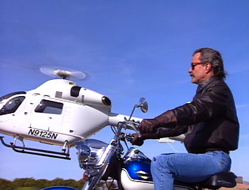
McDonnell Douglas was introducing their new MD 500 Explorer helicopter, which was designed for the Medivac market. It was a complete re-design from the sleek helicopters in the 500 series. It was, well… fat and slow. The bigger cabin made room enough for stretchers and medical personnel, but it certainly lowered the score in the sleek and sexy department. So the marketing problem we faced was how to make a boxy, sluggish helicopter appealing? Our creative department came up with the idea of positioning it with another chopper, i.e. the Harley Davidson Electro Glide. We got a vintage Electro Glide and fueled up the Explorer and off they went into testosterone territory, followed closely by our expert video production crew. Click here to see the award-winning video that premiered the Explorer at the Helicopter Association Internal convention: