The Association has been leading the way for Canon certification on the HDSLR 5D and 7D. Our Canon Camera Classes have been getting excellent reviews from students who need to learn how to use these incredible cameras fast.
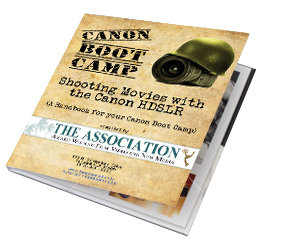
Our assumption is that those signing up for the classes lied their way on to a job, and they need to know by the next Monday how to professionally set up and use their camera. As a result, our Canon Camera Classes are super hands-on. We’ve even created a special handbook called “Shooting Movies with the Canon HDSLR” to ensure participants are able to have all the fundamentals down.
We even test each participant at the end of the both levels to ensure they fully understand and can execute the skills we teach.
There was an exponential increase in the number of mainstream television shows and feature films utilizing Canon DSLRs in the past two years. Here’s a list of a few examples:
“24″
“True Blood”
“Memphis Beat”
Captain America
“House M.D.”
“The Tonight Show”
“Saturday Night Live”
Anyone interested in getting trained on the Canon DSLR 5D & 7D can find out all about our classes by visiting canonbootcamp.com for the next event dates, or click on the links on the right of this blog for a specific upcoming class date.
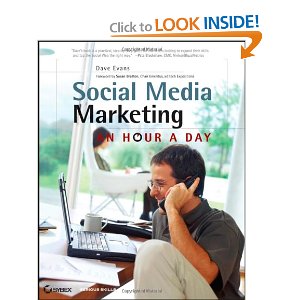
In Social Media Marketing an Hour a Day, Dave Evans remarks on one of the reasons a company wouldn’t want to start an online social networking campaign. Not enough happy customers! In the online world, it takes seconds to share information with hundreds, even thousands of millions of people. If your customers mostly don’t have good things to say about your service or product, opening the door to social media and the uncontrolled conversations that occur online could be costly.
Because small business owners tend to do a lot of the work themselves, and the customers often have direct access to the owner, it usually is easier to get good service. Even custom service. The result is that the customer tends to be happier and there is a better chance customers will be become Brand Advocates. Compare this to a franchised operation! The whole reason for franchising is so you can make a ton of money, in most cases. Customized service tends to be a little lower on the list of priorities.
Ok, so as a small business owner you probably have more happy customers than your larger competitors. And this is where your edge is over big business when it comes to corporate social media. The big companies tend to forget about the past customers and all of their efforts are on gaining new ones. A great example of this are cell phone companies that give the best deals to the new customer, leaving their long-term customers out in the cold.
Why is this an edge for you? Well, because in the case of a small business with a high ratio of happy customers, the customers can do the heavy lifting for you in the “new customer” department. Remember, we are talking about happy customers here. This edge doesn’t exist if your customers are mostly unhappy with your services. The happy customers, however, by blogging and tweeting about their experiences, can affect the new customer’s opinion and decision to buy. Do you research a purchase on Google before you commit? Well, so do your customers!
Here’s a really simple strategy almost any business owner can use:
1. Create a Facebook Fan Page for your business.2. As you come into contact your leads, prospects and customers like you normally do, work out a way to capture their email address with the purpose of inviting them to your Fan Page. This could be as simple as a sheet of paper on a clip board for their name and email address. Tip: When a customer is interested but declines to purchase “right now”, mention you have a Fan Page on Facebook. 9 times out of 10 they are on Facebook and will agree to be sent a link to the Fan Page.
3. Schedule time each week or each month to email the Fan Page URL to these specific customers.
4. Keep updating the content on the Fan Page with news, photos, event dates, etc. Make sure to add the “Reviews” application to the Fan Page!
5. Ask customers to write reviews and have promotions from time to time that give an incentive for your customers to share your company with their friends. Facebook has applications for that too. Actually, getting reviews also provides you with invaluable data along the lines of consumer analysis that can provide vital information for future promotional campaigns.
A really, really good reason to have a Facebook Fan Page for your business is because it is completely indexed by Google. One of my past clients was only been on the Internet for about 4 months, with just a Fan Page. With minimal content, she started showing up on first page of Google when her product was searched for by name. Ever since we started that Fan Page her phone orders have been steadily increasing as well, mostly from past customers re-ordering.
There is a lot you can do with a Fan page, and it’s free so it’s a good place to start! As long as you keep your customers happy with good service, keep inviting people to join your page, and interact (read, “listen”) with your customers, you’ll find that in most cases, your customers start marketing for you. At the very least, you can improve your ranking on Google.
Having a Fan Page doesn’t mean you should avoid getting proper SEO done, or avoid getting a website or even avoid doing marketing and advertising. All of those tried and true actions are valid and should be done if you can. But if you can’t afford them, Facebook Fan Pages are a great way to get started.
Anyway, the point is, as a small business owner you have something the big guys don’t have. YOU. As long as your customers can easily “share” you with their friends (who are likely in the same demographic as your customer!), they can pioneer in areas you couldn’t reach for lack of a budget or other reasons. I can’t think of any other medium where it’s easier to share than Social Media and online Social Networking. Ok, maybe preschool. But 4 year olds are probably not the right demographic!
Need a better understanding of the basics of enterprise social media? Check out my free webinar below:
From chocolate chip to Oreo, kids love ‘em, adults love ‘em. But on the web, the term “cookie” has a different meaning, and many people want nothing to do with them. Internet cookies are bits of text embedded in Web browsers that remember the sites you visit and help advertisers target you for pinpoint marketing. These people know how to get rid of the cookies but there is a new cookie called a “Flash cookie”, that eludes the normal ”delete cookies” procedure.
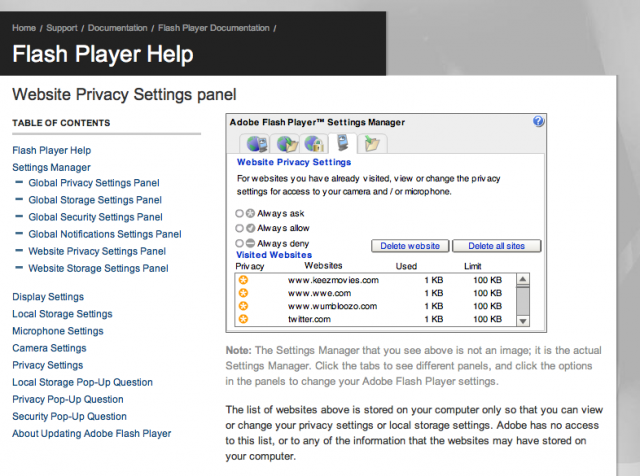
The Flash cookie, according to a recent article in Forbes magazine, takes a special procedure to remove it. First, open any Flash application (like YouTube), then, right click (or “control click” on the Mac). An Adobe Flash Player Help window should open up that looks like this.
It just took a few minutes to take away the Flash cookies and set my privacy settings to keep Flash cookies from piling up again.
Often the simplest solution is the best. The Association was hired to provide our corporate video production services for McDonnell Douglas. This custom video production had a specific message requiring a creative solution.
McDonnell Douglas developed the No Tail Rotor helicopter, also known as The NOTAR. Removing the tail rotor eliminates the danger of walking around behind the helicopter. Since conventional helicopters’ tail rotor blades spin so fast, they virtually disappear – sometimes people walk into them and get the vegomatic treatment. Another big plus of the NOTAR McDonnell Douglas wanted to feature is the system virtually eliminates noise, as the main noise from a helicopter is the tail rotor, not the big blades above the cabin.
Problem: Show how the new McDonnell Douglas helicopter is incredibly quiet.
Creative Solution: Have it land and take off without awakening a sleeping man and his dog.
The Scene: Historic Old Tucson (scenes of many Western movies).
We cast an older fellow to dress up like a prospector, rocked back on a chair taking a nap on the front porch of the cabin. At his feet, his trusty watchdog ‘Snappy’, who doesn’t miss a thing. The helicopter will land in the background and then take off again and we’ll see if they can do it without waking up either the prospector or the doggie.
The shoot day arrives with excellent weather and the video production crew is ready to go. The prospector looks sleepy and the dog is ready to go, although he looks a little “tight”, like a Swiss watch that won’t wind any more. The dog wrangler says that the dog’s not about to freak out, he’s just shivering in the early morning cold. So, we radio in the helicopter. Here he comes. Roll camera. The helicopter lands. The helicopter starts to lift off. The dog jumps.
Take Two: We radio in the helicopter. Roll camera. The helicopter lands. The helicopter starts to lift off. The dog jumps.
Take Three: We radio in the helicopter. “Roll camera! Steady everybody.” The helicopter lands. Somebody sneezes. The dog jumps.
Take Four: We radio in the helicopter. “Roll camera! Steady everybody.” The helicopter lands. Nothing moves. A lizard a half mile a way skitters down a rock. The dog jumps.
Take Five: Dog jumps.
Take Six: Dog yawns.
Take Seven: Dog wags his tail at his wrangler.
We have a “conference” with everyone EXCEPT the dog owner.
“Have we got a clean landing?”
“Yes”.
“So let’s get a clean take off.”
“It won’t work. The helicopter won’t land in the same place. So we have to re-stage the landing and takeoff until we get a good one.”
We motion over the dog owner.
“What can you give the dog to calm her down?”
“Nothing,” she responds.
“Do you have a staple gun?”
No one laughs.
“She’ll get it this time,” she promises.
Okay.
We radio in the helicopter. “Roll camera! Steady everybody.” The helicopter lands. The dog doesn’t move. The helicopter takes off. We watch the dog.
The dog doesn’t move.
We’ve got the shot!
“CUT !!!!”
It is a very quiet helicopter. See our final cut of the spot below, and compare the noise with the video (not produced by The Association) of a conventional helicopter:
To find out more about creating your own custom video production, contact us here.
It’s the time of year for New Year’s resolutions. Lose weight. Straighten up. Fly right. Stop this. Stop that. But why not decide to START some things this year? The Association can help.
Our purpose, here at The Association, is to increase marketing results for our clients with an effective marketing plan. We have a broad spectrum of “results-oriented” specialists available for your marketing campaigns – Social Networking, Pay Per Click, Web Videos, Animations, TV commercials, corporate video production services… But will a new campaign work? Should you risk your money? The Ogilvy & Mather website says, “Creating an emotional connection is one of the hardest things to do in marketing.” We agree. That’s why we use Optimized Market Research prior to executing a client campaign. Optimized Market Research nails down the “golden” data that guides our creative team to come up with campaigns that make the phone ring.
For example, one of our marketing campaigns for a heart doctor was initially going to feature the world-renowned doctor himself in the direct response TV ads. However, the Optimized Market Research indicated that heart patients don’t trust their doctors. They only trust other heart patients! So our TV spots featured heart patients instead of the doctor.
Similarly, the research for an attorney’s campaign revealed that people don’t trust lawyers. So we repositioned our attorney client to be a “consumer advocate” (which was actually more accurate anyway). Both campaigns drove in hundreds of leads in just a few days. We later created a video for the same law firm which continued to position them as consumer advocates:
By using Optimized Market Research, we have also increased Internet PPC (Pay Per Click) conversions by 4X the industry average. A conversion is when a prospect clicks on the pay per click ad to go to a “landing page.” On that page, they either fill out a form (convert) or they don’t. If they don’t convert, your money’s wasted. It’s also important that the people who click and “arrive” at the landing page are actually interested in what’s being sold! Part of Optimized Market Research is determining how to appeal only to the right audience. How much money would you save if the all the “wrong” prospects for your product or service avoided your ad?
A well research and executed campaigns is an investment. It should generate revenue, build a strong customer base and make a great future. Bottom line: We make the phone ring. Call us and we can get you on your way to a nice 2012. That’s our purpose. Go, baby, go!
*Ogilvy & Mather – an international advertising, marketing, and public relations agency based in New York City and owned by the WPP Group.
Have you ever said, “I’ll use Twitter the day Clint Eastwood takes up knitting!”?
You’re not alone. A lot of business people still aren’t sure Twitter is of value to them in business. In fact, they’re unclear about this whole corporate social media and social networking on the web. I was dragging my heels as well, probably because I didn’t understand what it was.
So, what is a social network?
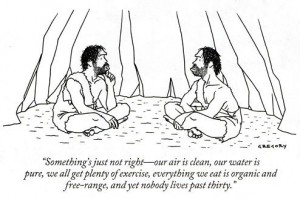
Wikipedia says, “A social network is a social structure made of individuals (or organizations) called “nodes,” which are tied (connected) by one or more specific types of interdependency, such as friendship, kinship, financial exchange, dislike, sexual relationships, or relationships of beliefs, knowledge or prestige.” From this definition you can see that social networking isn’t something new. I’ve got a social network and so do you. In fact, social networks have been around since the caveman days.
Cavemen were “tweeting” to alert each other of danger or perhaps just to check in with the wife. Caveman Ralph would stand on a hill and let out a scream that meant (roughly translated), “Leaving work, now, honey. Want me to pick up a pig on the way home?” As we’ve evolved, we’ve adopted innovative software to help us do caveman tasks. Take PowerPoint, for example. Before the big wooly mammoth hunt, the tribe leader, Tor the Merciless, would have his “creative artist”, Larry, paint “slides” on the cave so he could show his cross-eyed but well-meaning warriors what to do when the mammoth comes.
Tor would then “present” to the group to get their buy-in on his strategy for the hunt. (Tor tried to keep it down to less that twelve words per slide.) We’ve adopted PowerPoint to help me accomplish this age-old task of getting group buy-in. Surely we can adopt innovations to help us with our social networking.
If you’re having trouble adopting social networking it may be that you don’t understand the innovation. According to Wikipedia, Everett Rogers, in his studies of innovation, says that your “willingness and ability to adopt an innovation depends on your awareness, interest, evaluation, trial and adoption”.
And it’s true. I have been an early adopter of many things, if I understood them (understanding), they apply to me (interest) and they had value to me (evaluation) and worked well (trial). I did drag my feet and only bought the “Clapper” when the price came down. That’s because I didn’t place the value on it (evaluation) that they were selling it for originally. In summary, these new social networking web tools will make it much easier to stay in touch with the people in our social network in this time-shifted, virtual office world we live in.
And it’s so much better than screaming from the hilltop.
You could say that understanding enterprise social media is not such a mammoth task after all. Trevor, our social media strategist will explain it to you and how you can use it. If you’d like to understand Social Networking and social media marketing better, we heartily recommend a book called Social Media Marketing On One Hour a Day by Dave Evans. Wiley Publishing, available on Google at this link
In 1985 when we made our first custom video production for Princess Cruises, video was just beginning to come in to corporate use. The standard medium in the then fledgling Cruise Industry was a 16mm film which would be shown at a “Cruise Night”. These were events organized by travel agents where thirty or forty potential travelers would watch two or three films from the various Cruise Lines and hopefully be persuaded to go on a cruise. So our first film was shot, edited and shown in 16mm film. To show how relatively new the video medium was in that day, when I asked Princess if they wanted to make some VHS copies of the film they asked me why!!
The success of that first film was evidenced by the fact that Princess used it as their main sales and promotional piece for nearly 10 years! (They eventually saw the wisdom of video as a more exportable medium and had me make thousands of copies.) It also was the first of over 150 films and videos that we produced for Princess over the next 24 years.
Those years have seen sweeping changes beyond just the ascension of video as a recording and delivery medium. The dizzying rise of the Internet as a driving force behind the marketing, promotion and sales of cruises has caused a mad rush on the part of all the Cruise Lines to get their share.
But the Internet is just another delivery medium, like those original VHS tapes. Even in this Youtube, Twitter driven day, when it comes to content certain classic truths remain. Foremost is story. Every film or video has to have one to be any good. Second is that people are more interested in other people rather than things. Third is that, when you are dealing with visual media, you need to show what it is you are talking about. These may seem elementary, but you would be surprised how often they are violated.
When we produced “A World Apart” in 1985 we knew from talking to agents and potential passengers that the single biggest obstacle in convincing a person to take a cruise was a lack of data of what the experience would be about. This was in a day when not that many people had taken a cruise. So we set out to capture the experience.
We did this by filming various crew members from the Captain on down to waiters and room stewards and got them to tell us what they did. We then showed them going about their daily routines while we heard them describe what they enjoyed about their jobs. By showing actual crew members (somewhat handpicked of course) in actual cruise situations, as well as happy passengers and what they enjoyed about cruising, we were able to successfully convey the fun and adventure of an ocean cruise.
We also made the experience much more real to the viewer and dispelled some misgivings.
But that was then. How does this relate to today’s world of instant media gratification? Well, oddly enough, the more things change the more they stay the same. Princess Cruises recently moved from an old guard agency, Grey, to a virtual unknown boutique called Ignite. The reason was that Ignite deals almost exclusively with online advertising. And what did Ignite come up for their main marketing thrust?
Pretty much just what we had done with “A World Apart”! As you surf the web you might come across a pretty banner ad with a Princess Cruises Vessel sailing along in some beautiful far away sea. The ad says, “Click to see what it means to Escape Completely (Princess’ new tag line)”. When you do you are treated to an array of video snippets of passengers and crew, pretty much just like what we did in “A World Apart”. It happens quicker and the videos are shorter, to accommodate the Internet attention span, but the purpose and performances are exactly the same. The Internet is just a medium to convey information. The basics of what influences, entertains and moves people are still the same.
Lisa Tanzer has been a supervising producer for reality tv shows such as “Amish in the City,” “Deadliest Catch,” and “Triple Rush.” Lisa is currently the VP for Current Programming for Warm Springs Productions, and just became a Canon Boot Camp Survivor.
In reference to the boot camp, Lisa Tanzer, a first time students says, “At Warm Springs Productions, we use 7D all the time for b-roll, specialty shots, and time lapse. I love Canons and I thought it would be the smart thing to do. It definitely was.
“What I liked about the boot camp was that it was very hands-on. It made me feel more comfortable with the camera. I’m sure I’d want to take pro level ll so I can become even more comfortable with it. I would absolutely recommend this workshop. I was literally trying to think of people I could recommend it to!”
Lisa particpated in our Pro Level I Boot Camp, and received our Canon Certification for completing. One of the unique features of our Canon camera classes is that we maintain 100% passing skill requirement. Everyone leaves only after they understand the correct answers to all the questions on the course exam. It’s very important to us that each participant walks away with a complete understanding and all their questions answered.
Our attidtude towards training people in the Canon HDSLR 5D and other cameras, is that we assume you have a job the following week that requires use of the Canon HDSLR. It’s not just talk, it’s hands-on. To find out more about our current and upcoming classes, visit www.canonbootcamp.com
It’s hard to remember back over twenty five years when the last original episode of The Love Boat aired. Of course, that show has been in heavy syndication since then and the mythology has it that an episode is constantly playing somewhere in the world. But back in 1985 it was considered to have ‘jumped the shark’ and network execs felt justified in pulling the plug. Little did they know, however, that the lame little show would have a huge impact far beyond the entertainment world. It can reasonably be stated that The Love Boat launched a multi-billion dollar Cruise Industry that services over 13 million people a year and continues to grow. But The Love Boat had help. Enter, The Association!
In 1985 Princess Cruises asked us to make a promotional film to convince people to forsake a land-base vacation for the pleasures of a Princess Cruise. At the time, the industry served less than a million people and Princess had four ships, including the Island and Pacific Princesses, the original “Love Boats”. It was truly an unbelievable assignment and, realizing how fortunate we were, we set out to make the World’s Greatest Cruise Line Promotional Film. The success of our film was evidenced by the fact that Princess used it as their main sales and promotional piece for nearly ten years! It was also the first of over 150 films and videos we produced for Princess over the next twenty-four years. There are now 12 ships in the fleet with a capacity twenty times greater than when we signed on. Coincidence? We think not.
Although, we really can’t take total credit for the success of Princess Cruises and the greater Cruise Industry, there is no question that our original film was extremely successful both from an artistic and a business point of view. Why? Well, it wasn’t because we were such creative or experienced filmmakers. We weren’t. The real reason this film did so well was because we did the primary and secondary research on the potential audience really, really well. We asked dozens of travel agents about their clients’ views on cruising. Why they would or wouldn’t, what they expected, what they feared. We took a cruise and asked everyone on board why they were there, why they chose Princess, what they liked and didn’t like, etc. etc. We finally developed a crystal clear view of exactly what potential cruise passengers thought and what they would respond to. Then we went out and made a film that played to just those points. We knew it would be successful before we even started editing, simply because it addressed the audiences expectations.
Over the years we have employed this simple technique numerous times. In fact, we never make commercial productions without at least some survey of the prospective audience and their viewpoints. These days we utilize Optimized Market Research with one of our professional survey partners to do an in depth study so we can really get a handle on the viewing audience. It is probably the single most important activity of all of the many actions that result in a completed film. We are amazed when others in our industry don’t do this. It can almost guarantee success. This is just as true now as it was twenty-four years ago.
So if you want a successful commercial, promo or marketing video, regardless of the medium in which it’s shot or ultimately shown or displayed, never forget the market research data collection. Research your audience. Don’t shoot a frame before you really feel comfortable that you know exactly what that audience will respond to.As we say, “Know before you go.”
Michael Brewer has worked for ABC-TV, Good Morning America, ESPN, VH-1 and other broadcast outlets. His work has taken him to international locations including South Africa, Hong Kong, Cuba, and most recently Namibia.
“I had never worked with DSLR and wanted to get a solid background in it,” says director/cinematographer and Pro Level ll Graduate, Michael Brewer.
“I wanted to learn from people who really knew a lot about cameras, and [The Association] really know their stuff.
“I had researched workshops and I came upon a workshop done by [other organizations]. It was $1500. I ended up asking a few of my friends and colleagues about good workshops that were affordable. A couple of people recommended the boot camp at The Association. They told me it was great, and that it was only about $400. One guy told me, ‘After you take this class, all your questions will be answered’ and they were!”
The Association is a direct response advertising agency that has been providing Canon Certification on the Canon’s HDSLR 1D, 5D and 7D cameras for nearly 2 years. With over 28 years of background in corporate video production services, we thrill in teaching newbies and skilled industry experts alike in today’s cutting edge digital technologies. For more information about our Canon certification classes, contact us or visit www.canonbootcamp.com.