Name that tune: Da-da-da-daaa-da-da-da-daaaa…

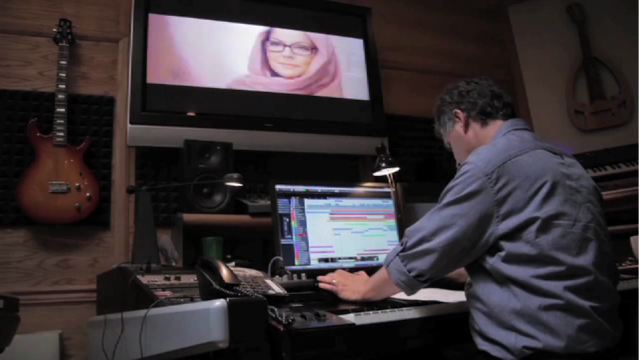
Bruce Chianese of Mad Cow Studios By now, you’ve hopefully seen the romantic short that our Canon Boot Camp participants shot. If not, watch it now. If you’ve seen it already, watch it again. Or should I say: “listen to it again”? If you’re like us at The Association, you have probably been humming or whistling the highly infectious melody over and over again.

Who is the man responsible for our infectiousness? That would be Bruce Chianese, composer extraordinaire. “The Sonnet” would not have been “The Sonnet” without its music. Bruce adds charm, romance, and excitement to the video with his original score. He enlisted the talent of Gigi “Gee” Rabe and Phil Feather. Gee is LA’s Accordion Diva and filled the studio’s hallway with about 5 different accordions. She and Bruce were determined to find the right sound for “The Sonnet”. They went with a “wet French tune” to achieve the provincial melody. Phil performed the flute and the saxophone to give the piece the whimsical yet sensual vibe.

To find out more about Bruce and his studio, visit his website.

We’d like to share a behind-the-scenes video of the making of the score. Watch as Gee and Phil skillfully master their instruments to create the delightful sounds of music. Let’s not forget Bruce, who wrote, directed, and played piano on “The Sonnet’s” score. Not only did he provide music, but also further contributed to the piece by laying in ambient sounds and sound effects. To preserve the Hollywood Magic, I won’t say which sounds are effects and which are genuine (but you can take a guess and leave it in the comment section!).

DARPA Develops Futuristic Gigapixel Camera Sensor

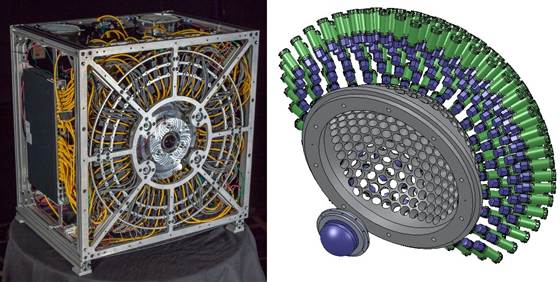
The United States Department of Defense’s research agency (DARPA) recently developed a new, hemispherical camera sensor that utilizes an array of small cameras coupled with extremely efficient electronics to create images up to a gigapixel in size. The camera they created with this new technology has a 120 degree field of view, putting it in ultra wide angle lens territory. The team behind the project also designed the whole thing to be scalable in the future, opening the door to higher gigapixels and smaller sizes.

Even though more megapixels doesn’t necessarily mean a better image, it’s really great to hear about projects like this. When electronics become smaller and more efficient, I wouldn’t be surprised to see gigapixel DSLR style camera in the future.  Of course the ability to render, edit, and share these photos would realistically need technology much more advanced than what we currently have, but we’re getting closer.

Gigapixel Camera

This level of detail could however cause headaches for filmmakers in the future. It’s already distracting enough to see every single pore on the television news anchor with HD, and with some mixed reactions to 48fps, the last thing we would want would be a level of detail that seems too real. I don’t want to be able to pick out fake set pieces and movies shouldn’t look the same as the super bowl. The processors would also have to be extremely powerful to scale or render video at such a large resolution.

Ether way though, I’m certainly excited for future camera technology and whatever it brings. If you’re interested in learning current Canon HDSLR technology, be sure to check out our Canon camera classes.

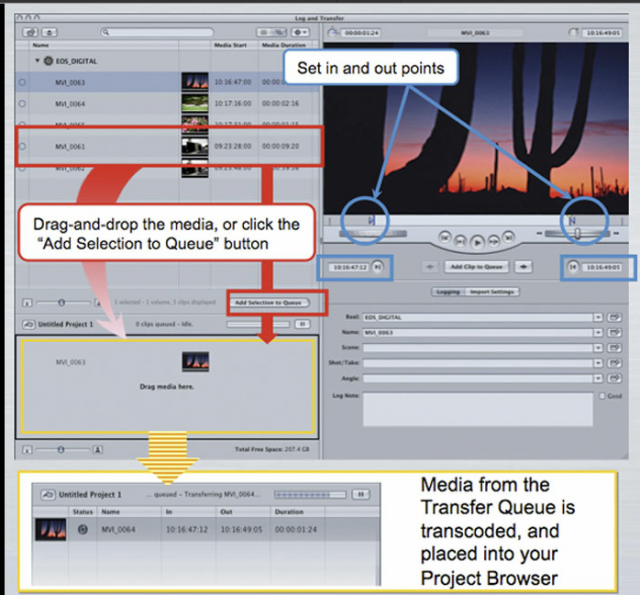
Which version of the Canon E1 Plug-in for Final Cut Pro are you using?

Image courtesy of www.learn.usa.canon.com

image courtesy of www.learn.usa.canon.com

If you’ve been to our Canon camera classes, chances are that you learned and still use the workflow we taught for Final Cut Pro. We’ve always recommended making 3 copies of your footage, and this still stands to be true.

However, if you are operating on the Canon plug-in E1 v1.2 or v1.3, it’s time to update your workflow!

We always made a point to copy the entire DCIM folder to maintain the card’s structure to “trick” the computer into thinking that it is working off of the CF card directly. This was true of the Canon E1 v1 plug-in, however, Canon has worked on updated versions of the plug-in that are less of a diva. The good news is you may now select the best clips from the card without having to copy over the bad takes too. This will definitely hurry the process along for the DIT, the assistant editor, and the editor.

Here is the new workflow we follow:

1.     Have 3 hard drives to make identical copies of your footage.

2.     Label your project folder and create subfolders for each scene

a.     If it’s a multi-cam shoot, create additional subfolders in the scenes folders.

3.     Insert your CF card into a card reader

4.     Open the card on your desktop to see its content

5.     Copy the DCIM folder as a whole OR just the .mov files that you want to work with

6.     Make 3 copies directly from the card (this way if one hard drive is corrupted, you aren’t copying corrupted footage over to another drive)

7.     Launch Final Cut Pro 6 or 7

8.     Go to File > Log and Transfer

9.     In Log and Transfer window go to the gear icon for Preferences

10. Select Canon E1 and set your preferred format, such as Apple ProRes 422

11. Drag the clips you want to transcode into the queue (you can also add in and out points to log sections of clips)

12. Your clips will be added directly to your bin.

Remember to eject your card properly from your computer just as you would eject a hard drive.

To sum it up, you no longer have to copy the DCIM folder when you are backing up your files. Simply copying the .mov files from your card will not interrupt your workflow when using Canon’s plug-in E1 software 1.2 or 1.3, if you are operating on Final Cut Pro versions 6.0.6, or 7.0.3 or later.


What DSLR Cameras Can Learn From Smartphones

Oh how I love my DSLR camera. Whether I’m conducting a professional photo shoot for a client, or just taking pictures with friends at the beach, I know the results will be fantastic. With a large sensor and interchangeable lens system, these highly detailed photos will look great on their own, or easily edited in post on my computer. It can also shoot video in 1080p, perfect for HDTV’s and the web. Having such quality functions in my camera has been so nice, considering I used to have a digital camera and a camcorder, neither of which ever achieved the results I so desperately longed for. Then something happened: The smartphone emerged and it has considerably challenged the concept of what a phone, or camera can actually do.
Smartphones

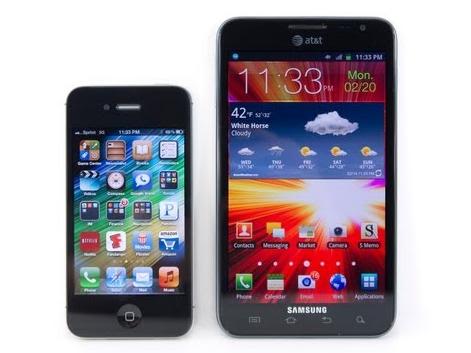
For example, the Nokia N8 smartphone can take a 12 megapixel photo, and also shoot 1080p. That’s great from a technological standpoint, but my DSLR still takes better photos and video anyway so that’s nothing special to me. But it’s everything my camera doesn’t do that makes the smartphone so desirable and unique. It’s essentially a hyper portable computer with a high-res camera built in. I can browse the internet, send emails and text messages, get directions, edit video and photos, and more. My camera should start shaking in its’ boots, and rightfully so, the smartphone is a much more functional and portable device.

Every year smartphones get thinner, more powerful, and with yearly upgrades to operating systems, there seems to be no end to the innovation and functionality of these devices. I also carry it around with me everywhere, something that cannot be said about my DSLR; it’s kinda big, I usually have to carry a bag around with a few lenses, extra batteries, filters, etc. Now, I have a device that allows me to take photos and video, edit them and email or upload to my social network directly. That’s a lot quicker and easier than popping out a memory card, inserting it into my computer, downloading the files, then organizing and importing into the appropriate program to edit, export, and re-upload online or wherever. 

You would think camera makers would be scrambling desperately trying to add these functionalities into their cameras, I mean the technology is there, and in a much smaller form factor. Unfortunately this is not the case, as we usually just get faster auto focus, higher mega-pixel counts, and higher prices. Pretty soon the quality from these small devices is going to rival that of a DSLR, and if companies don’t act soon, people will eventually move away from the format all together. This is a huge shame, and it looks like camera companies could take a lesson or two from the advent of the smartphone.

Perhaps camera companies are going to have to convince people they need a DSLR if they want professional quality, and the way to do that is to take three very important steps. First, they need to put aside for a moment everything they know about the history of cameras; second, catch up to smartphones and start integrating new technologies into cameras; and third, learn how to evolve and change with the demanding needs of the consumer. Here’s a couple of suggestions:.

1. Built in WiFi. This is a no-brainer. Being able to send a video or photo over the internet directly from the camera would exponentially increase the functionality of the DSLR. No more 4GB Wi-Fi SD cards please.

2. Developer software support. Allow developers to design applications for the camera. You don’t have to give them access to everything, but things like custom picture profiles would be a start, along with support from social networks like Facebook, Twitter, YouTube, Vimeo, etc. They do it very well already, let them have control. It’s going to be okay. I promise.

3. USB 3.0 or Thunderbolt support. We need faster direct to computer transfer speeds, especially now that SDXC cards support up to 128GB. Transferring a full card of 1080p video will certainly take a while if you have to rely on a card reader or USB 2.0.
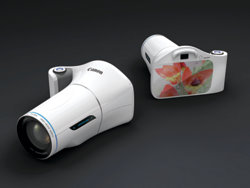
Canon Prototype

What the camera companies need to take away the most from the smartphone is actually right in the name: Smartphone. It’s not a phone, or a feature phone, or a music phone, but a smart phone. It does more than what was ever thought possible in a handheld device, and now everyone has one or wants one. Just look at what happened to Kodak. By being too conservative, too hesitant to innovate and change with the times, they were left behind and now forced to try and keep a faltering company afloat with lawsuits and back room deals. 

It’s time to start thinking of how you can make your DSLR a SmartDSLR and stop thinking that a camera has to be only a camera or you too will be left behind for something better. What smart innovations would you like to see added to DSLRs?

“If you don’t cannibalize yourself, someone else will.” – Steve Jobs

Romantic Short Film Shot by Canon Boot Camp

The Canon Boot Camp shoots a script during Pro Level II, one of which culminated in a romantic short film called, “The Sonnet.” I’ve seen it over and over, and it has emotional impact each time. Ever had a moment when reading a book transported your mind through the looking glass? Well, that’s what this film does:

Here’s the story of this excellent piece, as told by Fletcher Murray, Chief Instructor of the Canon Boot Camp as well as founding member and President of The Association:

“This video showcases the camera skills of our Canon Boot Camp filmmakers: MIchael Brewer, Michael G. Brewer, A.C., Danny Farrell, Daven Baptiste, Ernie Barojas, Hannah Murphy, J.P. Brennan, and Rick Apichairuk.

“The Sonnet is a refreshing change from the helter skelter, quick cut style of many videos today. This quiet, short film explores the allure of fiction, specifically a sonnet by Pablo Neruda, to lift a person out of the humdrum and into fantasy. The storyline was a collaboration of The Association’s creative team, Nancy Read, Celine Duong and Fletcher Murray.

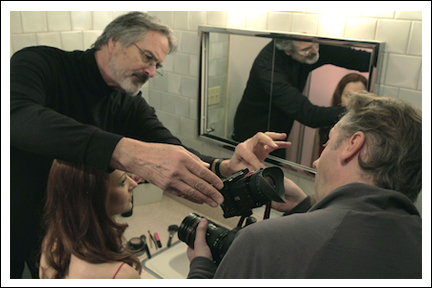
“Anna Easteden, Finland’s top award-winning actress, appears as the alter-Fletch and A.C. set up a shot for 'The Sonnet'ego of Michele Caine. Michele plays the part of a bored woman on the subway, on her way home from work. Rachid Makhlouf plays the part of the fantasy lover. Carlos Reig-Plaza voices Neruda’s Sonnet LXXXI with passion and purpose which takes Michele away into a romantic fantasy.

“A lot of pro’s like to help filmmakers move up their career path so not only did we have stellar talent but our post production team donated hours off the clock to give the film its polish.

Bruce Chianese of Mad Cow Studios, composed the score. Bruce’s orchestration features the sensuous sax, clarinet and flute of Phil Feather and the romantic accordion of L.A.’s accordion Diva, Gigi “Gee” Rabe.

“Editing was done by Ken Mader’s Nightfall Studios, which did the color grading and mastering to realize director Fletcher Murray’s vision of a Cinema Verite piece. Bill Lae’s green screen composites are virtually imperceptible, once more proving the excellence of the Canon 5D Mark II.

“With the excellent production support and lighting of our gaffer – Tom Myrdahl, the grip work of Lawrence Ribeiro and Graham Murphy, and supplemental shots by Celine Duong and F. S. Fitzgerald, the film shows again the great work filmmakers can do with the Canon DSLR cameras, which make it easy to tell any story, anywhere.

“Scenes from the film were shot as a part of The Association’s two-day Canon Boot Camp.

“Our Canon Boot Camp is a real filmmaking workshop, not just a lot of talking. On Day One we make sure everybody knows their camera and the workflow. On Day Two we shoot a film so our graduates have something to put on their reel they can be proud of.”

“Another thing that’s different about our Canon Boot Camp is we use Active Learning. Endorsed by Columbia University, U.C. Berkeley and others, Active Learning is the most effective method of learning because it’s learning by doing. The filmmakers have to demonstrate their skills by shooting a real film, rather than listen to somebody drone on and on. I couldn’t be happier with their shots.”

TECHNICAL DATA: Canon 5D Mk II and 7D were used, shooting in Technicolor’s Cinestyle. There are four green screen composited shots. The lenses were Canon, Nikkor and Zeiss CP.2.

For more info on the Canon Boot Camp, the longest running bootcamp in the world, go to canonbootcamp.com or call The Association at 818 841-9660.


DSLR Filmmaking & Lenses: What You Should Know Now – Part IV: Portrait Lens

portrait_lensPart IV: Portrait Lens

This week features a series titled: “DSLR Filmmaking & Lenses: What You Should Know Now,” a series of blog posts explaining the importance and benefits of specific types of camera lenses (ultra wide, wide, normal, portrait, telephoto) by contributor Jeff Bauer

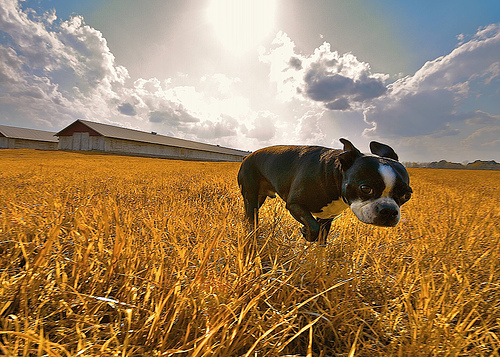
A portrait lens is considered to be any lens with a focal length between 70mm and 135mm on a full-frame camera sensor. At this perspective, the lens will produce a very shallow depth of field and create backgrounds that appear magnified or flattened. Without this shallow depth of field, objects in focus would be harder to distinguish from the background, causing distracting visuals and unrealistic results.

Let’s talk about perspective for a moment. The focal length of a lens does not determine the actual “perspective” of an image, but rather, it is the distance from the subject, or size, that does. The closer you get to a subject, the more the perspective changes, and turn, dramatically effects the “feel” of your images.
Portrait lenses are perfect for medium close-ups, close-ups, and extreme close-up. This is because subjects in frame will appear to have normal proportions and a nice separation from the background due to the shallow depth of field. You get the feeling that you are closer to the subject literally and figuratively, giving those emotional moments even more power and feeling. If you go with a wider lens, things appear normal and initially less dramatic. If you go with a longer lens, you have to distance yourself from you subject substantially, and without a tripod, things can get shaky very quickly.
When choosing lenses at the portrait length, it’s important to remember the type sensor your camera has, and that a crop factor will be applied as such. For example an 85mm lens on the Micro 4/3 format has roughly a 2x crop factor, effectively transforming into a 170mm lens. Just do the math!
Bokeh exampleOne thing that always gets a lot of attention when talking about long-focus style lenses is bokeh. Bokeh is essentially the image quality of the out of focus areas. The quality of the glass and the number of physical aperture blades in the lens are key to getting the soft and dreamy look associated with good bokeh. Expensive lenses tend to have more aperture blades, resulting in a smoother iris and in effect, a more pleasing background. Most people can’t tell the difference between good or great bokeh, but bad bokeh is easy to spot, and impossible to ignore.
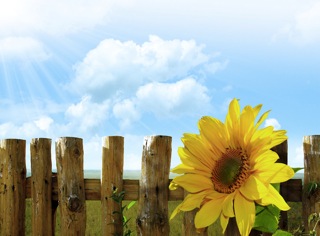
While quality portrait lenses tend to be slower, heavier, and relatively expensive, it is the ultimate weapon for wringing emotion out of a scene. When used correctly, there’s nothing quite like it.
Next – Part V: Telephoto Lens


DSLR Filmmaking & Lenses: What You Should Know Now – Part III: Normal Angle Lens

Normal Angle Lens Example

Part III: Normal Angle Lens

This week features a series titled: “DSLR Filmmaking & Lenses: What You Should Know Now,” a series of blog posts explaining the importance and benefits of specific types of camera lenses (ultra wide, wide, normal, portrait, telephoto) by contributor Jeff Bauer

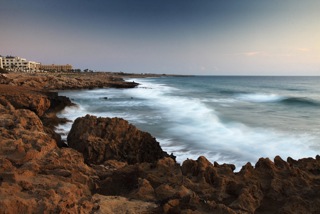
A normal angle lens is considered to be any lens with a focal length similar or slightly greater than the size of the film or digital sensor in the camera body (35mm – 70mm). Falling in-between a wide angle lens and a portrait lens, this “normal” or “natural” field of view is consistent with what the human eye perceives. The perspective created is usually attractive to the average person because it’s the closest to emulating the look and feel of every day life, while not appearing overly compressed or expanded.
A couple of great things about normal angle lenses is that they tend to be faster (aperture) and on average more affordable than any other lens type. This is why most photographers and DSLR filmmakers carry 35mm and 50mm lenses, swear by them time and time again. With a constant aperture usually at f1.8 or lower, these lenses instantly become your best tool when filming in low light situations. Since camera shutter is normally set to 50 or 60 (depending on 24fps or 30fps) for filming, we can’t get more light to the sensor without some very strobe-like effects. Having a fast lens can extremely useful, especially when trying to draw in every bit of detail without having to bump up ISO.
Most lenses tend to be “soft” when aperture is “open” or at its’ fastest speed, and unfortunately with these lenses, it’s no different. Only until you start closing the aperture down to around f5.6 are you going to get traditionally sharp images.  However, “soft” doesn’t always mean “bad.” Since DSLR’s have large sensors, they are able to pick up lots of detail, but sometimes you aren’t going to want perfection because it looks too real. Think of it this way, do you want to really be able to see the actress’s make up and all her pores, or so you want a nice soft glow that seems to radiate around her?
Depth of field plays an important role here as well. The smaller the f-stop, the shallower the depth of field becomes, so when framing a shot, thinking about what should be in focus and out of focus becomes less creative and more technical. When you close the aperture, more of the image starts coming into focus, so unless you want a very small area in focus, having the super fast lens isn’t as useful.
One of the major downsides attributed to these lenses though, is build quality, and it varies considerably. For example, Canon sells a brand new EF 50mm f1.8 for about $100. This seems like a really good deal considering the speed and low price. But when you look at their L Series 50mm f1.2, it’s normally $2600! Not exactly cheap from an independent filmmaker’s standpoint.
I have personally always liked the look of these lenses. They aren’t as flashy and unique as a wide angle, or as dreamy as a telephoto, but they give you the perception that the camera is you, that you’re looking out at those characters yourself, that you are there, experiencing everything they are. For that reason, normal angle lenses, when used appropriately, have the most power to truly connect people with your story and the world you create.
Next – Part IV: Portrait Lens


DSLR Filmmaking & Lenses: What You Should Know Now – Part II: Wide Angle Lens

Wide Angle Lens Example

Part II: Wide Angle Lens

This week features a series titled: “DSLR Filmmaking & Lenses: What You Should Know Now,” a series of blog posts explaining the importance and benefits of specific types of camera lenses (ultra wide, wide, normal, portrait, telephoto) by contributor Jeff Bauer

A wide angle lens is considered to be any lens with a focal length between 24mm and 35mm on a full-frame camera sensor. At this perspective, the lens will show less barrel distortion than an ultra wide angle lens, but produce shallower depth of field; better for close ups.
There are two different types of wide angle lenses: Short-focus and retro-focus. DSLR style cameras can only use retro-focus lenses because of the way the sensor is built into the camera. To achieve a high quality, low distortion wide angle lens compatible with DSLR’s, asymmetrical designs became the choice for manufacturers. This design shifts the focal plane of the lens further back than normal, retaining the characteristics present in other lenses such as viewing and focusing.
There are plenty of quality wide angle lenses out there, but choosing which one can be tricky. There are prime lenses which have a fixed focal length (ex. 28mm) and zoom lenses (ex. 11-17mm) that have a variable focal length. Each type of lens has it’s advantages and disadvantages both in quality and flexibility. Overall, it’s really important to do research on all the different lenses before you come to a decision. Be sure to compare the image quality, distortion, any chromatic aberrations, and vignetting.
A zoom lens can be very useful, covering a wide range of focal lengths, but most tend to have slow, variable apertures (ex. f3.5 – f5.6). If the lens does have a fixed aperture, the actual size and weight of the lens ends up being significantly larger and heavier along with an increase in price.
Prime lenses can realistically have any sized aperture, but the higher quality ones will have fixed speeds such as f2.0, f1.6, or f0.95. These are also equally expensive and lack the variable focal length present in zoom lenses, but usually end up with the finest glass, and effectively the best looking footage at a specific focal length.
Wide angle lenses are best used for landscapes, time-lapses, POV camera work, and documentary films.
Next – Part III: Normal Angle Lens


DSLR Filmmaking & Lenses: What You Should Know Now – Part I: Ultra Wide Angle Lens

Ultra Wide Lens Example

Part I: Ultra Wide Angle Lens

This week features a series titled: “DSLR Filmmaking & Lenses: What You Should Know Now,” a series of blog posts explaining the importance and benefits of specific types of camera lenses (ultra wide, wide, normal, portrait, telephoto) by contributor Jeff Bauer

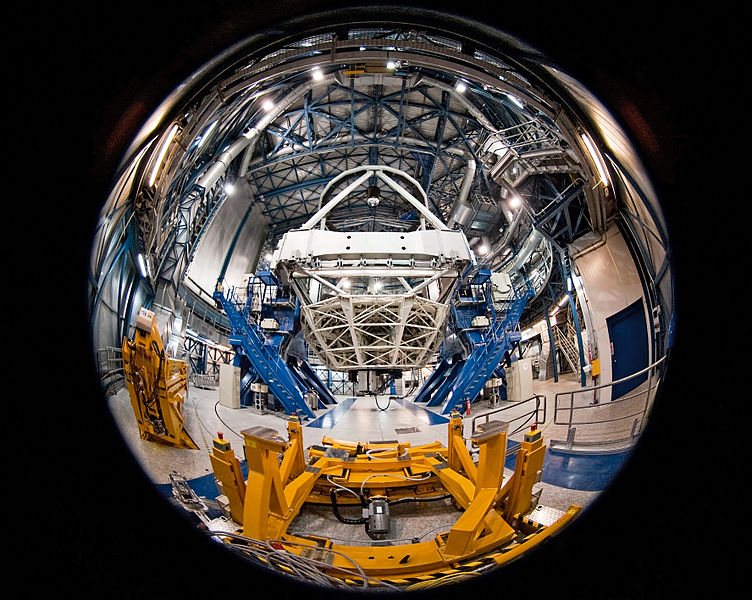
An ultra wide angle lens is considered to be any lens with a focal length substantially smaller than the size of the film or digital sensor in the camera body. The focal length for an ultra wide angle lens on 35mm film or full-frame sensor, is technically less than 24mm. These lenses typically have an angle of view greater than 90 degrees and a large depth of field.

Example of a shot taken with a fisheye lensDepending on the perspective you are trying to create, wide and ultra-wide angle lenses can either be considered fisheye or rectilinear. Fisheye lenses produce heavy circular distortion, pushing an image outward from the center, giving the impression that distant objects are further away than they actually are. Rectilinear lenses aren’t usually as wide, but allow for a more realistic image without the circular distortion. Each lens has a focal length and with that, an angle of view. This is going to determine how much you see within your frame.
A few things to take into account when looking at wide angle lenses are going to be size, speed, and price. They are typically some of the largest and most expensive lenses outside of the 300mm + telephoto range, so it’s important to be honest with your wants and needs. The speed of the lens, known as the aperture, not only determines the amount of light able to pass through it, but also the actual size and surprisingly the price of the lens. As the speed increases (lower f-stop numbers), the number of elements inside the lens usually have to increase both in size and number to deal with the distortions that usually occur that wide. A faster ultra wide angle lens will give you more low light capabilities, it will also allow you gain a little separation from your primary subject and the background. This is great for close up’s but not particularly useful for landscapes.
I think most filmmakers are so drawn to ultra wide angle lenses because they create very unique and cinematic images not possible on longer lenses. I know when I’m starting to frame my shots, I think to myself, “What type of lens is going to help bring this scene to life? Why do I want these characteristics specifically in my shot?” These are questions only you can answer. Each person has their own artistic vision and their own ideal perspective, and as long as you have a good reason for filming it that specific way, you’ll feel good when someone likes it, and have a good argument against people who didn’t like it.
Next – Part II: Wide Angle Lens